100% Natural Ingredients — Pure Potent Proven — Free Delivery all over Pakistan
100% Natural Ingredients — Pure Potent Proven — Free Delivery all over Pakistan
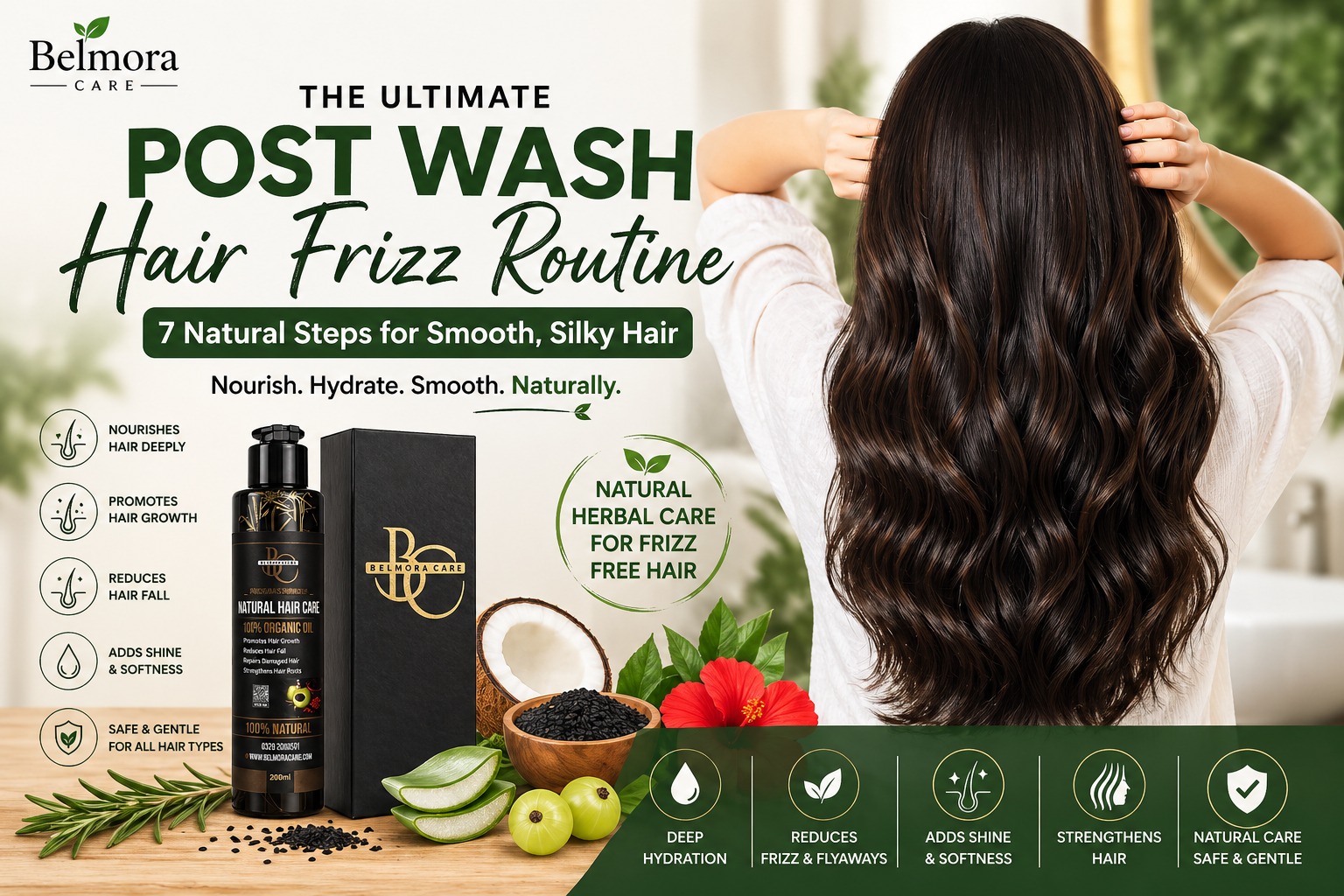
We have all been there. You spend time washing your hair, hoping for those smooth, shiny locks you see in commercials. But as soon as your hair starts to dry, it happens. It poofs up! Suddenly, you are dealing with a “lion’s mane” that feels impossible to tame. If you feel frustrated by hair that looks messy right after a shower, you are not alone.
Finding the right post-wash hair frizz routine is the key to turning those bad hair days into great ones. It is not just about what you do in the shower; it is about how you treat your hair the moment you step out. Let’s look at why this happens and how you can fix it using the power of nature.
Think of each strand of your hair like a tiny tree branch covered in shingles, called cuticles. When your hair is healthy and hydrated, these shingles lay flat and smooth. But when hair is dry or damaged, those shingles lift up. (Source: dermatology research)
Micro-tip: Puffy hair is usually a cry for help! It means your hair is searching for moisture in the air because it doesn’t have enough of its own.
When those cuticles lift, moisture from the air enters the hair shaft, causing it to swell and frizz. Did you know that nearly 60% of women struggle with frizz due to cuticle damage or high humidity? (Source: health websites). Without a solid post-wash hair frizz routine, your hair stays “open” and vulnerable to the environment.
Before we fix the problem, we need to know what is causing it. Often, our daily habits are the real villains.
Harsh Chemical Shampoos: Many big-brand shampoos use strong chemicals called sulfates. These strip away the natural oils your scalp needs to stay smooth.
High-Heat Styling Tools: Using a blow dryer on the highest setting right after a wash “boils” the water inside your hair, leading to breakage.
Environmental Stressors: Humidity and pollution can rough up the hair surface.
Diet and Lifestyle: Not drinking enough water or eating enough healthy fats can make hair brittle from the inside out.
Micro-tip: Hard water in your shower might be a hidden enemy. The minerals in the water can build up on your hair, making it feel stiff and frizzy.
When you have frizz, it is tempting to grab a bottle of “silicone” serum. While these make hair look shiny for an hour, they often just coat the hair and trap dryness inside. Eventually, the chemicals build up and make the frizz even worse.
On the other hand, natural and herbal solutions actually feed your hair. Ingredients like those found in Belmora Care products penetrate the hair shaft to provide real moisture.
Chemical Products: Provide a temporary “fake” shine; can cause long-term dryness.
Natural Products: Offer deep nourishment; improve hair health over time; eco-friendly.
“I switched to herbal oils, and for the first time in years, my hair feels like silk, not straw!” — A happy Belmora Care user.
Ready to change your hair game? Follow this simple post-wash hair frizz routine every time you wash:
Never rub your hair with a regular bath towel. The rough fibers act like sandpaper on your hair cuticles. Instead, use a microfiber towel or an old cotton T-shirt to gently squeeze out the water.
Wet hair is very weak. Use a wide-tooth comb starting from the ends and moving up to the roots. This prevents snapping and unnecessary frizz.
While your hair is still damp, apply a few drops of herbal oil. This acts as a barrier, locking in moisture and keeping the cuticles flat. Explore our herbal oil collection to find the perfect match for your hair type.
Whenever possible, let your hair air-dry. If you must use a dryer, use the “cool” setting. Heat is a major trigger for a failed post-wash hair frizz routine.
Micro-tip: Never rub your hair with a rough cotton towel! This is the fastest way to create tangles and frizz.
Nature has given us everything we need for beautiful hair. Here are the stars of the show:
Rosemary Oil: Great for strengthening the hair and improving scalp circulation.
Amla (Indian Gooseberry): A “superfood” for hair that provides deep conditioning and a natural shine.
Shikakai: Known as “fruit for hair,” it cleanses gently without stripping away moisture.
Aloe Vera: Provides a cooling effect and hydrates the hair strands instantly.
Micro-tip: Rosemary oil doesn’t just smell great; it helps keep your scalp healthy so your hair grows in stronger.
Managing frizz doesn’t have to be a battle. By switching to a natural post-wash hair frizz routine and using gentle ingredients, you are giving your hair the love it deserves. Remember, smooth hair starts with healthy habits and the right botanical support.
Ready to transform your mane? Explore our herbal oil collection at Belmora Care today and say goodbye to frizz for good!
1. What is the best post-wash hair frizz routine for beginners?
The best routine starts with gentle drying using a microfiber towel, followed by applying a natural oil like Belmora Care to damp hair to seal in moisture.
2. Does washing hair every day cause more frizz?
Yes. Washing too often strips away natural sebum, leaving hair dry. Aim to wash 2–3 times a week to keep your post-wash hair frizz routine effective.
3. Are natural products better than chemical ones for frizz control?
Absolutely. Chemical products often use silicones that coat the hair, while natural products like Belmora Care nourish the hair from the inside out for long-lasting results.
4. How do I stop hair frizz after washing without using heat?
Apply a leave-in herbal oil to damp hair and use the “plopping” method with a cotton T-shirt to let your hair dry naturally without ruffling the cuticles.
5. Can Rosemary oil help with a post-wash hair frizz routine?
Yes! Rosemary oil helps smooth the hair surface and strengthens the strands, making them less likely to “poof” up when dry.
6. What ingredients should I avoid if I have frizzy hair?
Avoid sulfates, parabens, and alcohols. These are common in many shampoos and can ruin any post-wash hair frizz routine by drying out your hair.
7. How long does it take to see results from a natural anti-frizz routine?
While you will see a difference in smoothness immediately, it usually takes 2–4 weeks for your hair to fully adjust and show its true natural shine.
8. Why does my hair get frizzy as soon as it dries?
This happens because the moisture inside the hair evaporates, and the cuticles lift to grab moisture from the air. Using an oil helps “lock” that moisture inside.
9. Can I use Belmora Care products on colored hair?
Yes. Because our products use natural ingredients like Amla and Shikakai, they are very gentle and safe for color-treated hair.
10. What is the “plopping” method in a post-wash hair frizz routine?
Plopping involves wrapping your wet hair in a cotton T-shirt on top of your head. This keeps the hair in its natural shape while it dries, preventing frizz.