
15 Proven Ways to Stop Hair Fall Naturally in Pakistan
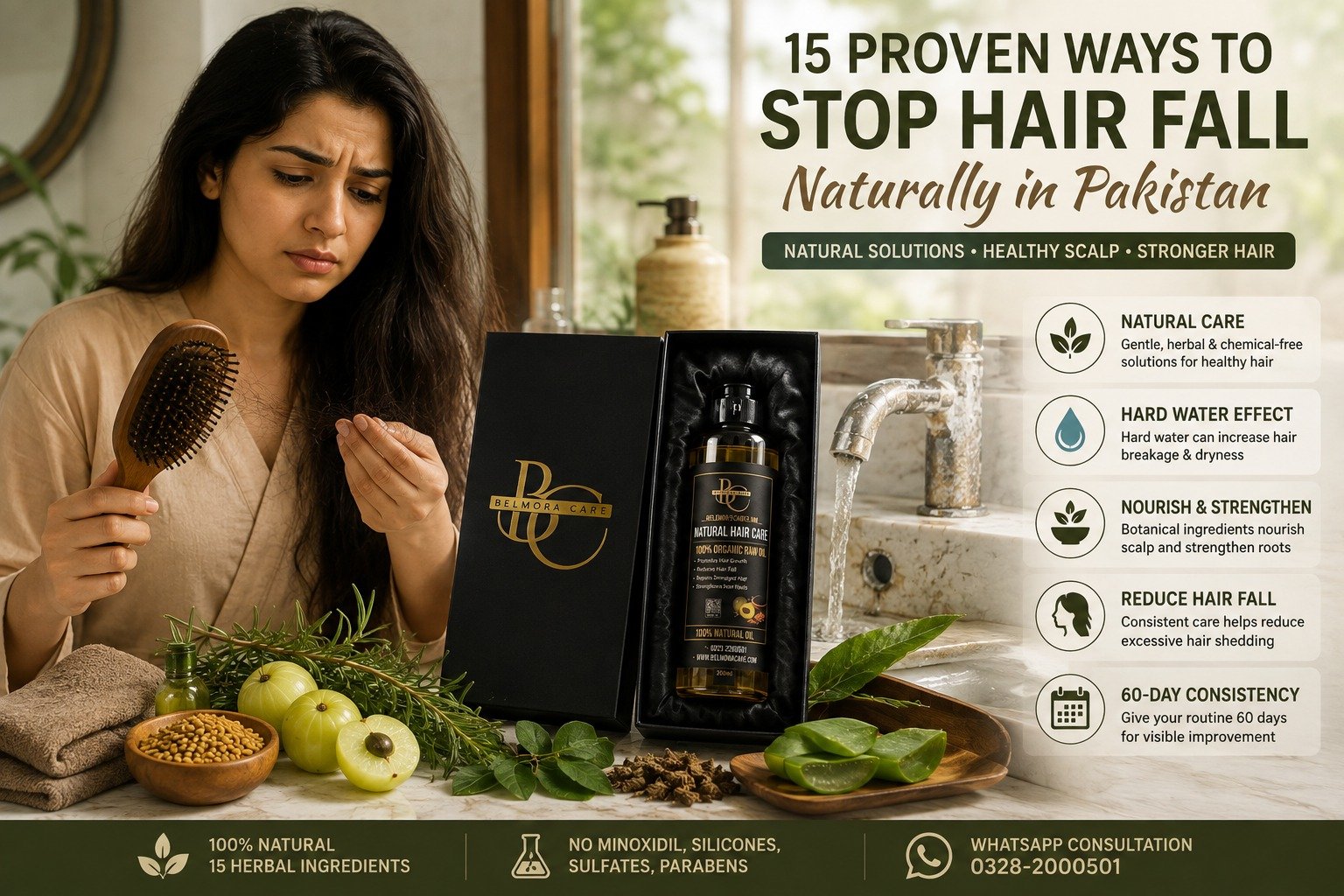
If you live in Lahore, Multan, Faisalabad, Rawalpindi, or Islamabad, you may notice a frustrating pattern: more hair on the comb, pillow, or shower floor after summer heat, monsoon humidity, or months of washing with hard water. Sometimes the problem is true hair shedding. Sometimes it is weakened hair snapping along the shaft.
What Are the Most Effective Natural Ways to Stop Hair Fall?
The most effective natural ways to stop hair fall combine adequate nutrition, gentle scalp care, reduced breakage, good sleep, stress management, protection from harsh water and heat, and consistent botanical conditioning. Natural care can support healthier hair, but persistent or sudden hair loss needs professional evaluation because the underlying cause may be hormonal, nutritional, inflammatory or hereditary.
The first step is therefore not buying another “miracle” hair-growth product. It is understanding why your hair is falling.
Hair Fall in Pakistan Is Not Always Caused by the Same Problem
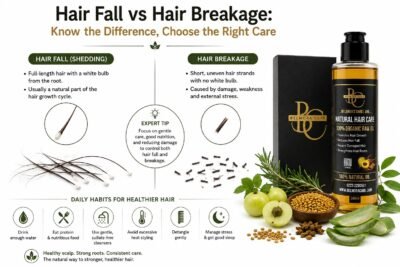
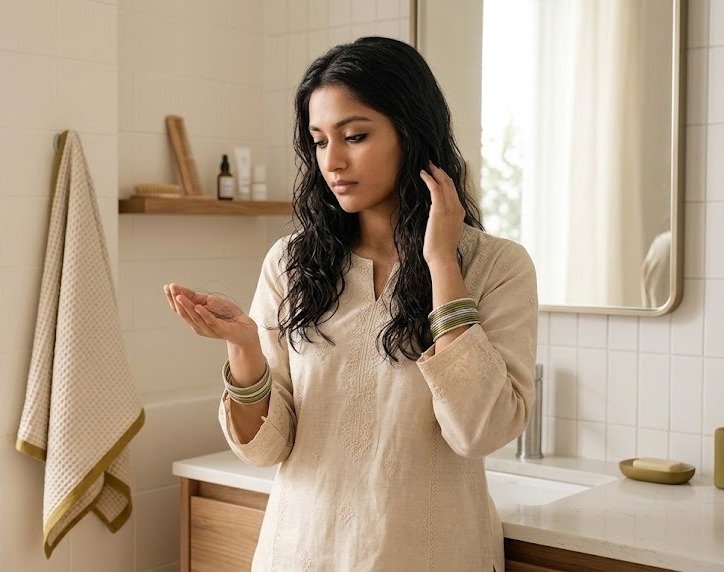
Shedding happens when hairs naturally leave the growth cycle. Breakage occurs when the hair shaft becomes weak and snaps. This distinction matters. Hard water, excessive heat styling, aggressive brushing, tight hairstyles and dry weather may contribute to hair-fiber damage and breakage without necessarily causing a primary follicular disorder.
Progressive thinning, widening part lines, bald patches or rapidly increasing shedding, however, can indicate an underlying condition that needs diagnosis. With that distinction in mind, here are 15 practical ways to improve your hair-care routine.
The American Academy of Dermatology recommends determining the cause of hair loss because different types of hair loss require different treatments. With that distinction in mind, here are 15 practical approaches.
1. Start With Adequate Protein
Hair is primarily made from keratin, a structural protein. If your overall diet is consistently low in protein, your body has fewer nutritional resources available for normal tissue maintenance and hair production.
For Pakistani households, practical protein sources include eggs, milk, yogurt, lentils, chickpeas, beans, fish, chicken and other protein-rich foods that fit your dietary requirements. The goal is not a special “hair-loss diet.” It is a nutritionally adequate everyday diet.
2. Don’t Take Hair Supplements Blindly
Biotin, iron, zinc and other supplements are frequently marketed as universal solutions for hair fall.
They are not. If a deficiency exists, correcting it can be important. But taking high doses without evidence of deficiency can be unnecessary or even harmful.
The American Academy of Dermatology specifically advises using supplements such as iron, zinc or biotin when testing identifies a deficiency rather than assuming that more is better. If your shedding is persistent, discuss appropriate testing with a qualified healthcare professional instead of self-prescribing multiple supplements.
3. Treat Hard Water as a Hair-Shaft Problem
This is especially relevant in parts of Pakistan where household water contains substantial mineral content. You may recognize hard water from the white or chalky deposits around taps, showerheads and bathroom surfaces.
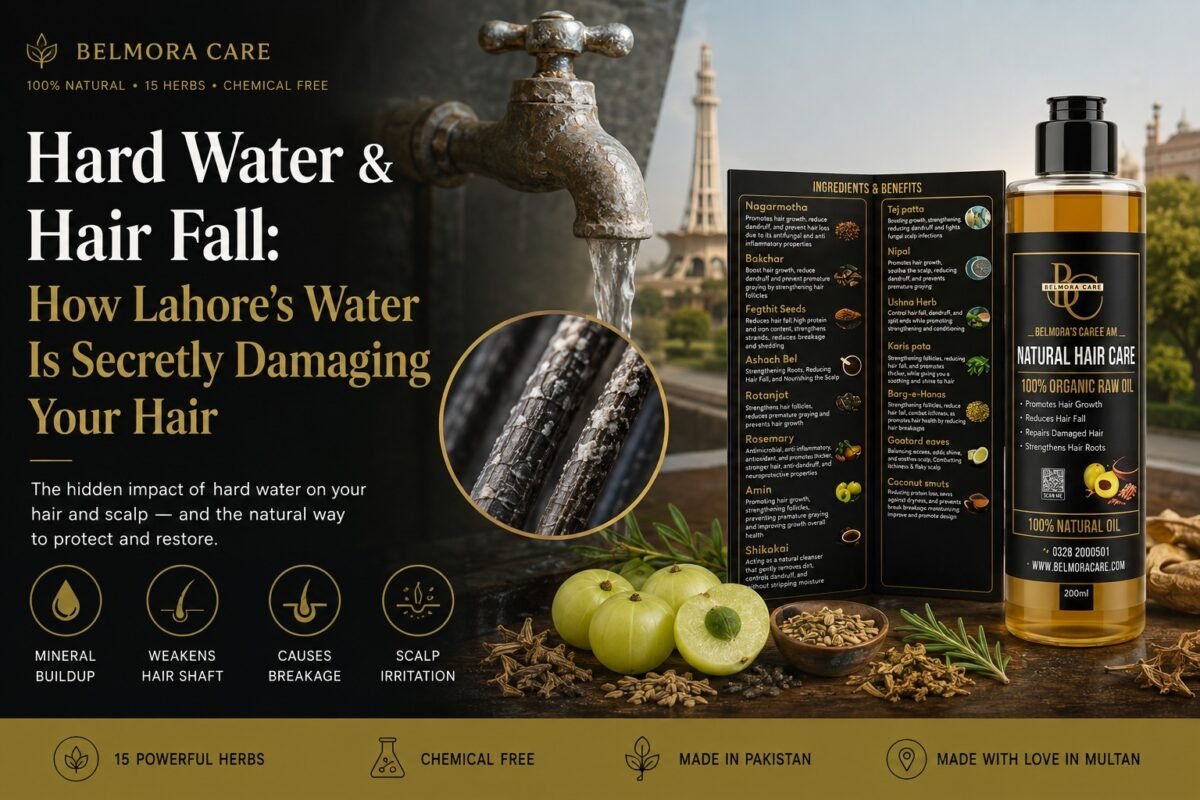
WHO explains that water hardness is mainly associated with calcium and magnesium, and harder water can contribute to scale formation and increased soap consumption. There is also hair-specific evidence from Pakistan. A study using hard-water samples from districts in Khyber Pakhtunkhwa found that hair exposed to hard water showed lower tensile strength than hair exposed to deionized water, leading researchers to conclude that hard water can increase hair breakage.
That does not mean hard water is necessarily “blocking your follicles.”
The more defensible concern is weakened hair fibers and increased breakage. Consider using a suitable water-softening or filtration approach where appropriate and avoid aggressive scrubbing of mineral-affected hair.
4. Wash Your Scalp According to Its Needs
Avoid the idea that everyone should wash their hair exactly the same number of times per week. An oily scalp, dry scalp and heavily polluted urban scalp have different needs.
If sweat, sebum, dust and styling products accumulate, cleansing becomes important. If your scalp becomes excessively dry or irritated after frequent washing, reassess the cleanser and frequency. The objective is a clean, comfortable scalp without repeatedly stripping or irritating it.
5. Reduce Excessive Heat
Straighteners, curling irons and very hot blow-dryers can weaken the hair shaft. The result may look like “hair fall” because shorter broken hairs accumulate around the bathroom and on clothing.
Use lower heat where possible, reduce repeated passes and allow hair to partially air-dry before using a dryer. Healthy-looking hair depends not only on what happens at the follicle but also on protecting the hair fiber that has already emerged from the scalp.
6. Stop Pulling the Hair Tightly
Repeated tension can damage hair. Very tight ponytails, buns, braids and other styles that constantly pull on the same areas can contribute to hair damage and, in some circumstances, traction-related hair loss.
Choose looser styles when possible. If you notice tenderness around the hairline after wearing a particular hairstyle, treat that discomfort as a warning rather than something to ignore.
7. Detangle More Gently
Mechanical stress can contribute significantly to breakage. Instead of forcing a brush through stubborn knots, work gradually from the ends toward the roots. Fingers or a suitable wide-tooth comb can be useful for gentle detangling.
Avoid aggressively pulling wet or tangled hair. Small changes in brushing technique can reduce preventable breakage and make it easier to distinguish true shedding from damaged strands.
8. Protect the Scalp From Environmental Stress
Pakistan’s urban environments can expose hair and scalp to dust, particulate matter, sweat and heat. Lahore’s traffic-heavy areas, Multan’s hot and dry periods and Islamabad’s seasonal changes can all create different hair-care challenges.
You do not need an elaborate routine. Keep the scalp clean, avoid unnecessary product buildup and protect the hair from prolonged environmental exposure when practical. A simple routine performed consistently is usually more useful than constantly changing products.
9. Prioritize Sleep and Stress Management
Hair does not exist independently of the rest of your body.
Major physiological stress can influence the hair cycle. Significant illness, surgery, major weight loss and other stressful events can sometimes be followed by increased shedding.
That means stress management should not be treated as a decorative wellness recommendation.
Aim for consistent sleep, regular meals, physical activity and practical stress-reduction habits.
You do not need to eliminate every stressful event.
You need to avoid allowing chronic poor recovery to become your normal routine.
10. Avoid Aggressive “Detox” Treatments
Strong acids, harsh scrubs, excessive essential oils and DIY chemical mixtures can irritate the scalp.
A burning or tingling sensation does not prove that a treatment is “working.”
In fact, irritation can make a scalp-care routine harder to maintain.
Natural does not automatically mean harmless.
The concentration, formulation, frequency and individual sensitivity all matter.
11. Use Scalp-Compatible Botanical Oils
A well-formulated botanical oil can serve a useful role in a hair-care routine by reducing dryness, improving lubrication and helping condition the hair fiber.
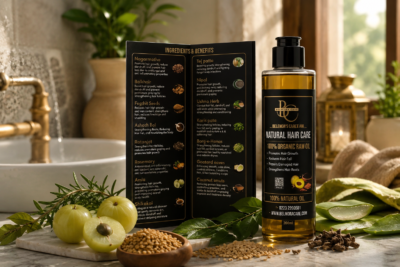
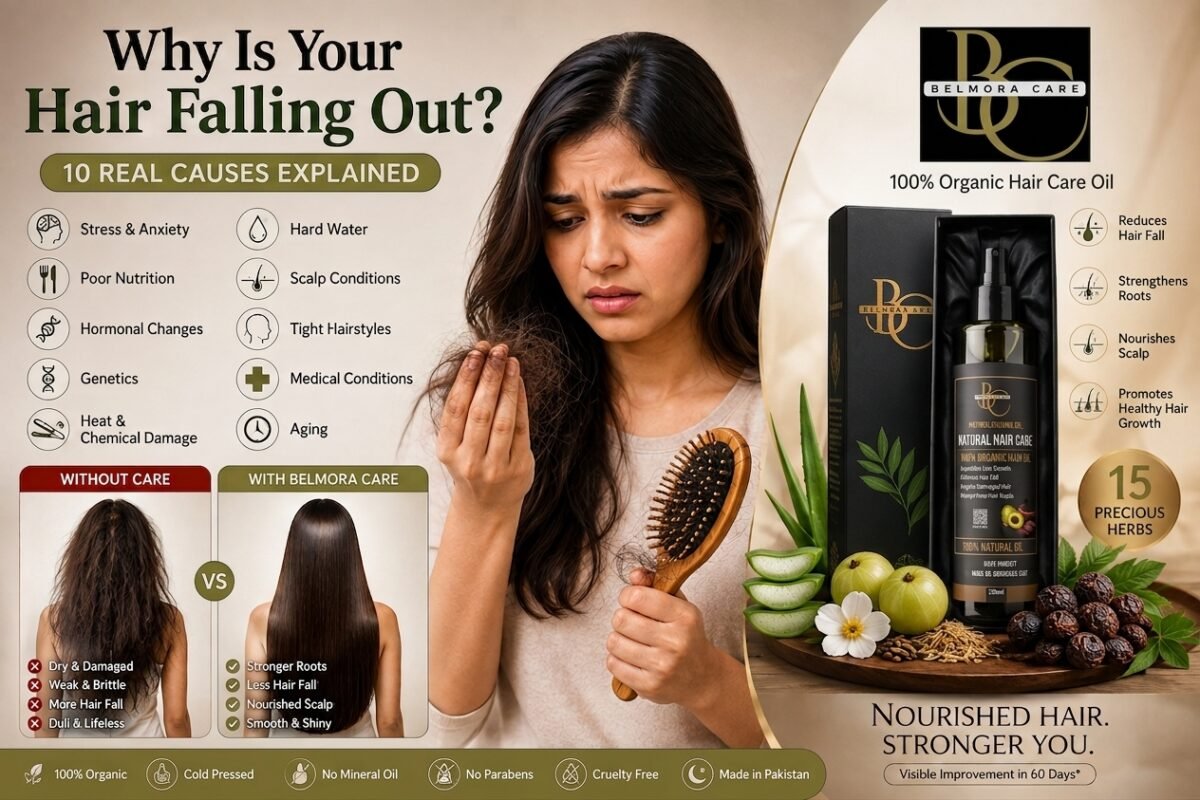
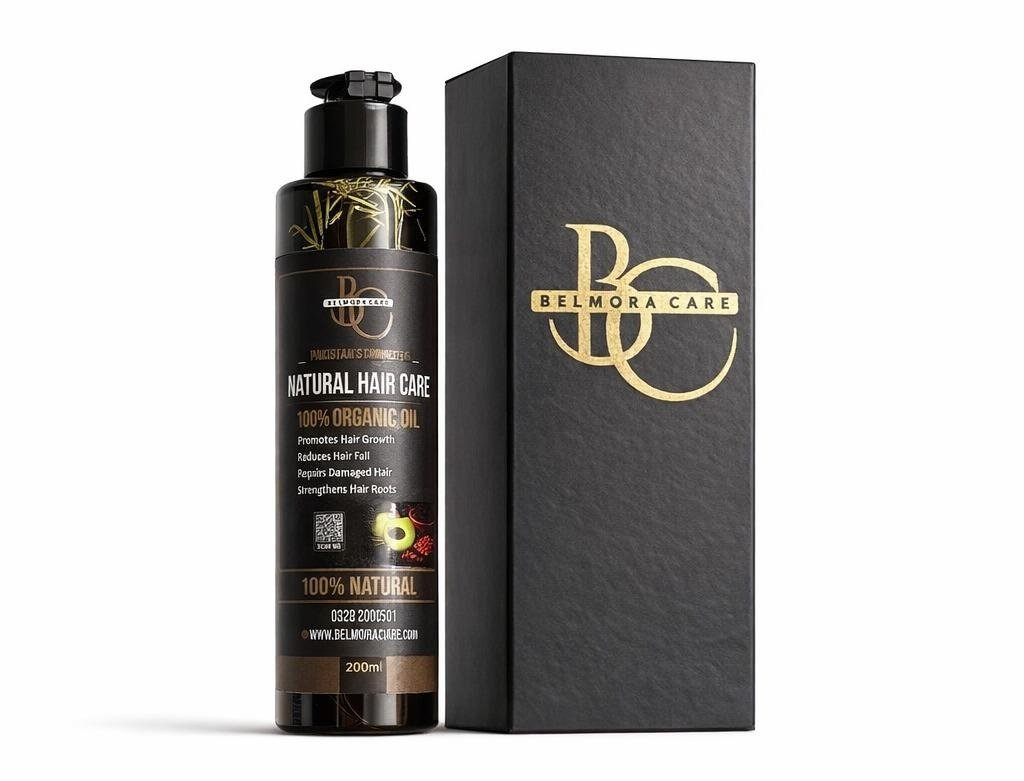
Belmora Care uses a multi-botanical formulation featuring traditional ingredients such as amla, bhringraj, aloe vera, rosemary and fenugreek among its 15-herb blend. The purpose should be understood realistically. An oil is not a substitute for diagnosing androgenetic alopecia, alopecia areata, scalp infection or nutritional deficiency.
Its value is as part of a consistent scalp and hair-conditioning routine.
12. Give Amla Its Proper Scientific Context
Amla, botanically known as Emblica officinalis or Phyllanthus emblica, has a long history in South Asian and Persian traditional hair practices.
Modern evidence is still developing. A randomized controlled trial involving women with female androgenetic alopecia found that an oral Amla preparation improved the anagen-to-telogen ratio compared with placebo after 12 weeks. However, this was an oral Amla intervention, not evidence that every topical Amla oil will produce the same result. That distinction is important. A scientifically responsible article should say that Amla is promising but not proven to be a universal hair-loss treatment.
13. Don’t Confuse Silicone Smoothing With Follicle Treatment
Silicones can make damaged hair feel smoother because they alter the surface characteristics of the hair fiber. That can be cosmetically useful. But smoother hair does not automatically mean healthier follicles. Likewise, a product that produces a cooling or tingling sensation is not necessarily stimulating new hair growth.
When choosing a routine, separate three objectives:
- Scalp health.
Hair-fiber protection.
Treatment of an underlying hair-loss disorder.
A cosmetic ingredient may help with one without treating another.
14. Massage the Scalp Gently
- A gentle scalp massage can make oil application more consistent and may help distribute a topical product across the scalp.
- Use fingertips rather than fingernails.
- Do not aggressively scratch or rub areas that are already inflamed.
- The goal is controlled, comfortable massage rather than friction.
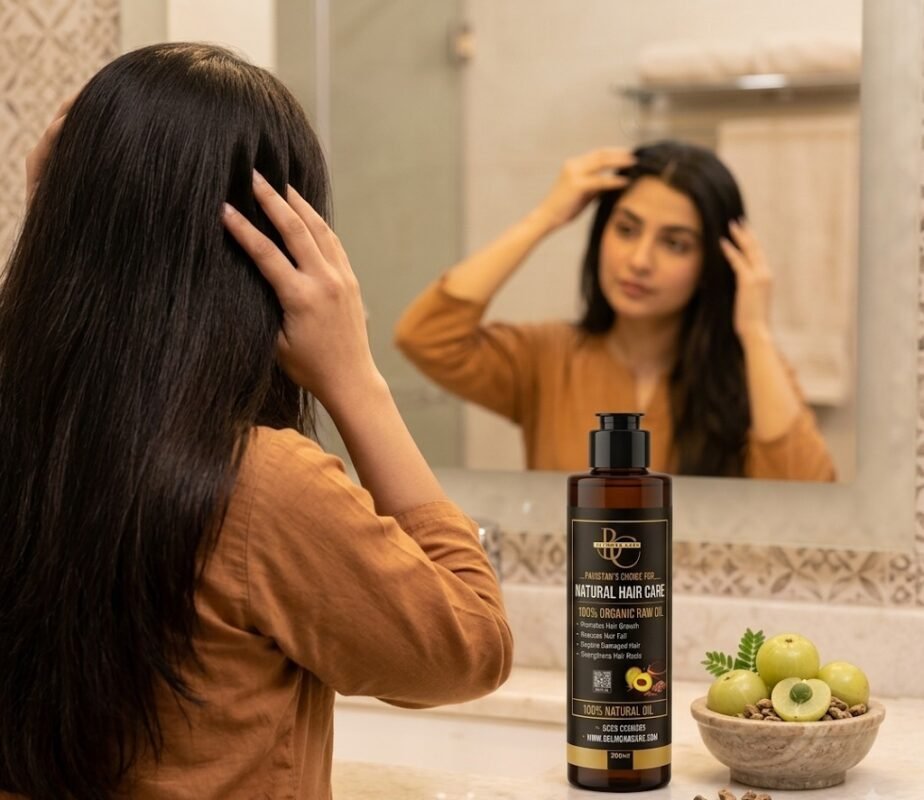
- A useful routine is to apply a suitable amount of oil, gently massage the scalp and wash according to your normal cleansing schedule.
- Consistency matters more than force.
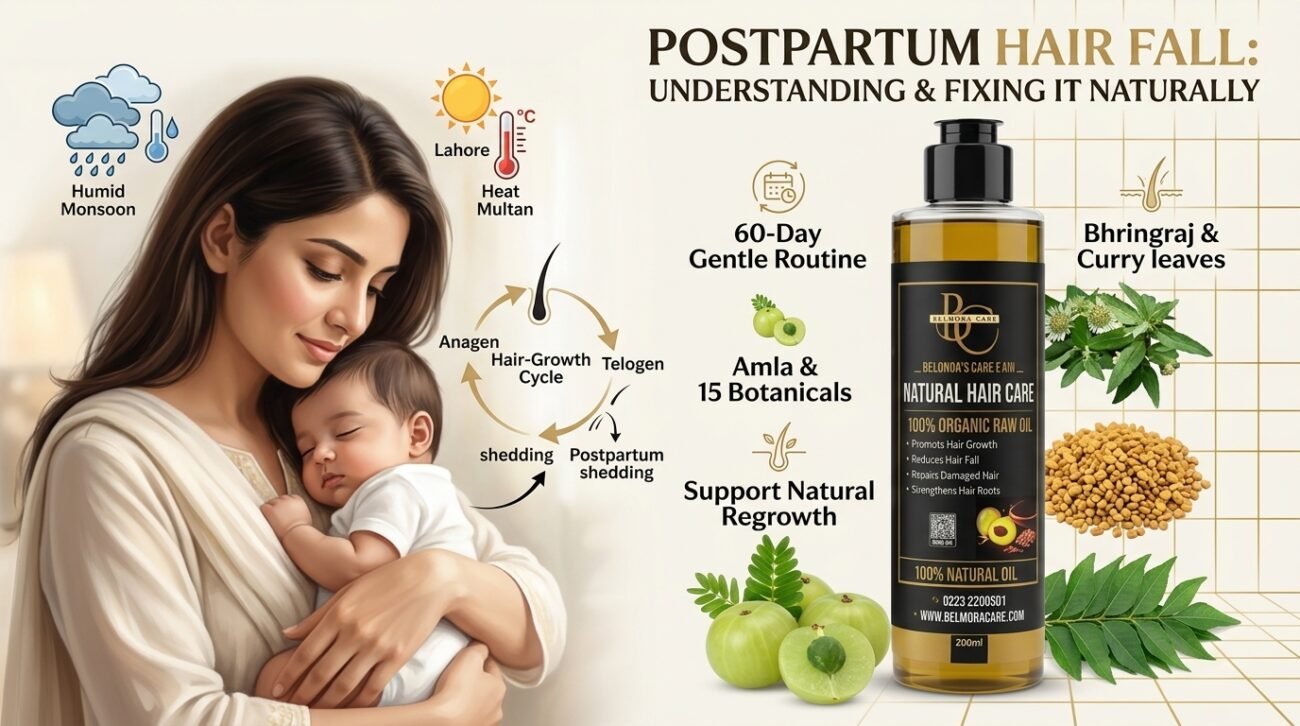
15. Track Your Hair for at Least 60 Days
One of the biggest mistakes people make is changing their routine every seven days. Hair biology moves more slowly than social-media marketing. Instead, establish a simple baseline.
Take photographs of your parting and hairline under similar lighting. Record major changes in shedding, scalp irritation and breakage. Then reassess after several weeks rather than judging your routine after two or three washes. For a botanical hair-care routine such as Belmora Care, 60 days can be used as a practical consistency window for assessing changes in hair feel, breakage and perceived shedding.
It should not be treated as a guarantee that dormant follicles will reactivate in every person. Hair-loss causes vary considerably, and established medical hair-loss treatments may require considerably longer periods to assess effectiveness. For example, the AAD notes that minoxidil generally requires around 6–12 months to judge its results.
Hair Fall vs Hair Breakage: The Difference Matters
Before concluding that your follicles are “dying,” examine the hairs you are losing. A full-length strand with a small bulb-like end may represent normal shedding.
Short pieces of different lengths may point more toward breakage. If your hair is becoming progressively thinner at the crown or parting, if bald patches appear, or if your scalp becomes painful, inflamed or unusually scaly, do not rely solely on home remedies.
A Simple Natural Hair-Fall Routine for Pakistan
You do not need 15 products to follow these principles.
Morning
- Eat a protein-containing breakfast.
- Stay adequately hydrated.
- Avoid unnecessarily tight hairstyles.
- Protect your hair from excessive heat.
Wash days
- Clean the scalp appropriately.
- Rinse thoroughly.
- Detangle gently.
- Avoid aggressive towel rubbing.
Oil days
- Apply a moderate amount of a suitable botanical oil.
- Massage gently with fingertips.
- Allow reasonable contact time according to the product instructions.
- Cleanse without excessive scrubbing.
Weekly
- Check whether breakage is increasing.
- Look for scalp irritation.
- Photograph your parting under consistent lighting.
- Review whether your routine is actually sustainable.
When Should You See a Dermatologist?
Natural hair care is appropriate as supportive care, but it should not delay diagnosis when hair loss is persistent or unusual.
Seek professional evaluation if you notice:
- Sudden or rapidly increasing shedding
- Circular or sharply defined bald patches
- Progressive recession
- A rapidly widening part
- Scalp pain or significant inflammation
- Persistent scaling or suspected infection
- Hair loss accompanied by other unexplained symptoms
- Hair loss that continues despite improving your routine
The AAD emphasizes that hair loss can have multiple causes, including hereditary loss, medical conditions, nutritional deficiencies and inflammatory or infectious problems.
Why a Consistent Botanical Routine Can Make More Sense Than Constantly Switching Products
The attraction of natural hair care is not simply that an ingredient comes from a plant.
The more useful question is:
Can the routine be used consistently without unnecessarily irritating the scalp or damaging the hair fiber?
Belmora Care’s formulation combines 15 traditional botanicals and is positioned around reducing hair fall, strengthening roots, conditioning damaged hair and supporting healthier-looking hair.
That makes it most sensible to view the oil as one component of a broader hair-care strategy rather than as a replacement for medical diagnosis.
Conclusion
The best natural approach to hair fall in Pakistan is not one miracle ingredient.
It is a system: better nutrition + gentle cleansing + hard-water awareness + less heat + reduced mechanical damage + stress and sleep management + consistent scalp care + realistic expectations.
If you want to add a botanical oil to that routine, Belmora Care’s 15-herb formulation provides a plant-based option designed for regular scalp and hair conditioning.
Use a 60-day consistency window to evaluate your routine rather than expecting an overnight transformation. And if hair loss is sudden, progressive or accompanied by scalp symptoms, get the cause assessed rather than continuing to experiment indefinitely. For product information or personalized ordering support, visit the Belmora Care Shop or contact Belmora Care through WhatsApp at 0328-2000501.
Frequently Asked Questions
1. What are the best natural ways to stop hair fall?
The most useful natural strategies include adequate protein, correcting confirmed nutritional deficiencies, gentle scalp cleansing, reducing heat and traction, protecting hair from hard-water-related breakage, managing stress and maintaining a consistent scalp-care routine. Persistent or sudden hair loss should be professionally assessed rather than treated only with home remedies.
2. Can hard water cause hair fall?
Hard water is better understood as a potential contributor to hair damage and breakage rather than a proven cause of follicle blockage. A Pakistani study found reduced hair tensile strength after hard-water exposure. Using appropriate filtration or softening and reducing mechanical damage may help protect vulnerable hair fibers.
3. How can I reduce hair fall naturally at home?
Start with adequate nutrition, gentle washing, reduced heat styling, loose hairstyles, careful detangling, scalp hygiene, stress management and consistent conditioning. Avoid aggressive DIY treatments. If shedding remains excessive or progressive, identify the underlying cause with a qualified healthcare professional instead of repeatedly changing home remedies.
4. Is Amla good for hair fall?
Amla has a long traditional history in South Asian hair care and some emerging clinical evidence. A randomized controlled trial of an oral amla preparation in women with androgenetic alopecia reported improvement in the anagen-to-telogen ratio after 12 weeks. However, this does not prove that every topical amla oil produces the same result.
5. Can herbal hair oil stop hair fall permanently?
No herbal oil should be described as a guaranteed permanent cure for every type of hair loss. Hair fall can result from hereditary, nutritional, inflammatory, hormonal and other causes. A botanical oil may support scalp conditioning and reduce hair-fiber dryness or breakage, but persistent loss needs appropriate diagnosis.
6. How long does natural hair care take to show results?
Hair changes slowly, so judging a routine after a few days is unreliable. A 60-day period can provide a useful consistency window for monitoring perceived shedding, breakage and hair condition. However, biological regrowth varies by cause, and some established hair-loss treatments require six months or longer to evaluate.
7. Does oiling reduce hair breakage?
A suitable hair oil can improve lubrication and conditioning, which may help reduce friction and make hair feel smoother. However, oiling cannot repair a damaged follicle or guarantee new growth. Combine oiling with gentle detangling, reduced heat exposure and protection from excessive mechanical stress.
8. Is Belmora Care suitable for a natural hair-care routine?
Belmora Care is formulated as a multi-botanical hair oil containing 15 traditional herbs, including ingredients such as amla, bhringraj, aloe vera, rosemary and fenugreek. It can be incorporated into a consistent scalp and hair-conditioning routine, while persistent or medically significant hair loss should still be professionally evaluated.
9. Should I use minoxidil or natural hair oil?
They serve different purposes and should not be treated as interchangeable. Minoxidil has clinical evidence for certain forms of hair loss, while a botanical oil primarily functions as a conditioning and scalp-care product. If you have progressive thinning or suspected pattern hair loss, discuss appropriate treatment with a dermatologist.
10. When should I stop treating hair fall at home?
Seek professional assessment when hair loss is sudden, rapidly progressive, patchy, painful, inflamed or associated with significant scalp changes. You should also seek advice when shedding continues despite improving your hair-care routine. Correctly identifying the cause is more important than repeatedly trying different natural products.
Natural care can support healthier hair. The goal is not to promise a miracle—the goal is to build a routine your scalp and hair can tolerate consistently.





 Free shipping to all over Pakistan
 100% Organic Herbs – No Chemicals