

Does Hard Water Make Your Hair Dry and Brittle? A Pakistan Guide
Ayesha had not changed her shampoo. She had not started using a straightener every day either. Yet after a few weeks, something felt different.
Every time she washed her hair, it seemed rougher when it dried. Her ends tangled more easily, her hair looked less shiny, and brushing it felt harder than before.
At first, she blamed the shampoo. Then the weather. Then she wondered whether she simply needed a better hair oil.
But there was another part of her routine she had not considered: the water she was washing her hair with.
If your hair has started feeling dry, rough or brittle after washing, you may have wondered the same thing: does hard water make your hair dry and brittle?
The short answer is it can contribute to dryness, roughness and breakage, especially when mineral buildup accumulates on the hair. But hard water is not automatically the only reason your hair feels dry.

Let’s look at what may be happening and what you can realistically do.
What Is Hard Water and Why Does It Matter for Hair?
Hard water contains higher amounts of dissolved minerals, particularly calcium and magnesium. When you regularly wash your hair with mineral-rich water, some of those minerals can remain on the hair surface.
This matters because your hair is not simply a smooth piece of fiber. The outside of each strand has a protective cuticle made of overlapping layers.
When mineral residue builds up, hair can feel different. It may become rougher, duller or more difficult to manage.
L’Oréal Professionnel and Healthline both describe calcium and magnesium buildup as a factor that can leave hair dry, dull or more prone to breakage.
Calcium, Magnesium and Mineral Buildup
Think about the white residue that sometimes appears around a tap or shower fitting.
You cannot necessarily see the same process happening on your hair, but mineral-rich water can leave deposits on surfaces, including hair.
That does not mean every mineral deposit automatically damages every person’s hair. Hair type, porosity, washing habits, products and water composition can all influence the result.
The important point is that hard water can be one piece of the puzzle.
Why Hair Can Feel Rough After Washing
One confusing sign is hair that feels less soft after washing instead of more manageable.
Mineral buildup can contribute to a coated or rough feeling. If the hair is already dry, chemically treated, heat-styled or easily tangled, the effect may become more noticeable.
This is why simply adding another styling product does not always solve the underlying problem.
Sometimes the better approach is to look at the entire routine.
How Does Hard Water Make Hair Dry and Brittle?
Hard water does not work like bleach or a straightening chemical that immediately transforms the structure of hair.
Instead, the concern is repeated exposure and mineral deposits.
Healthline explains that mineral buildup can form a film on the hair and make it harder for moisture to penetrate, leaving the hair dry and more prone to breakage.
What Happens on the Hair Cuticle?
Imagine your hair cuticle like a protective outer layer.
When the surface is smooth and well cared for, hair tends to feel easier to manage. When the surface becomes rough or coated with residue, the hair can feel less smooth.
That can contribute to:
- Rough texture
- Dull appearance
- Frizz
- Tangling
- Increased difficulty during detangling
Research on hard-water exposure has also investigated changes in hair surface properties and strength, although results can depend on the water conditions and testing method. So it is better to view hard water as a potential contributor, not a universal explanation for every hair problem.
Why Dryness Can Turn Into Breakage
Dry-feeling hair is not necessarily the same thing as damaged hair.
But when hair is already fragile and becomes difficult to detangle, repeated pulling, brushing or rough handling can increase mechanical stress.
That is why a complete routine matters.
Reducing unnecessary friction, using appropriate conditioning, handling wet hair gently and addressing mineral buildup when relevant can all be more useful than blaming one product.
What Are the Signs of Hard Water Hair Damage?
There is no single symptom that proves your water is the cause.
Instead, look for a pattern.
Rough, Dull or Frizzy Hair
You may notice that your hair:
- Feels rough after washing
- Looks less shiny
- Becomes frizzy
- Feels coated or heavy
- Is difficult to style
These signs can also have other causes, so consider your overall routine.
Tangling, Brittleness and Breakage
Another possible pattern is increased tangling or breakage.
If your hair suddenly becomes harder to comb, avoid assuming that the water is definitely responsible.
Consider other changes too:
- New shampoo
- More heat styling
- Hair colouring
- Frequent washing
- Sun exposure
- Dry weather
- Tight hairstyles
- Rough towel drying
A good hair-care strategy looks at several factors instead of searching for one perfect culprit.
Why Hard Water Can Be a Problem for Pakistani Hair
For Pakistani readers, water deserves a place in the conversation because water quality varies significantly between locations and sources.
Some Pakistani hair-care competitors specifically focus on hard water in cities and connect it with roughness, dryness and buildup.
But avoid assuming that every city, neighborhood or household has identical water hardness.
Your actual water source matters.
Local Water, Weather and Washing Habits
Pakistan also has major variations in climate.
Hot weather, dust, humidity, dry conditions and frequent washing can all affect how hair feels.
For example, someone washing their hair frequently during a hot period may experience dryness for several reasons at once.
That is why it makes more sense to think about:
Water + washing + weather + products + handling
rather than blaming hard water alone.
How to Check Whether Water May Be Part of the Problem
Start with simple observations.
Do you see mineral residue around taps?
Does soap or shampoo seem harder to lather?
Did your hair texture change after moving to a different area?
Does your hair consistently feel rough after washing even though your products have not changed?
These clues do not prove that hard water is responsible, but they can tell you that your water quality deserves closer attention.
For a more reliable answer, local water testing is better than relying on appearance alone.
How Can You Protect Your Hair From Hard Water?
You do not necessarily need a complicated 10-step routine.
Start with the basics.
Improve Your Wash-Day Routine
Wet your hair thoroughly before cleansing.
Use shampoo according to your scalp and hair needs rather than simply using more product.
Rinse thoroughly.
Follow with a suitable conditioner, especially if your lengths feel dry.
If mineral buildup is a recurring issue, a suitable clarifying or chelating product may be worth discussing with a hair-care professional or choosing based on its intended use.
Healthline and L’Oréal Professionnel both discuss mineral-removal approaches and water-softening options for hard-water hair.
Focus on Moisture and Gentle Hair Care
If your hair is already dry, avoid adding unnecessary stress.
Try:
- Gentle detangling
- Less aggressive towel drying
- Moderate heat styling
- Regular conditioning
- Protective hairstyles that do not pull tightly
- A consistent hair-care routine
The goal is not to find one magical product.
The goal is to reduce the factors that make your hair harder to manage.
Consider Water-Softening or Mineral-Removal Options
If your water is genuinely hard, addressing the water itself can be useful.
Depending on your situation, options may include a suitable water-softening system or a hair-care product designed to remove mineral buildup.
However, do not assume that every shower filter removes all forms of water hardness. The technology and filter design matter.
Where Does Hair Oiling Fit Into a Hard-Water Routine?
This is where many people make an important mistake.
Hair oil and hard-water mineral removal are not the same thing.
Oil should not be presented as a replacement for fixing water quality or removing mineral buildup.
Instead, think about oiling as one part of a broader hair-care routine.
What Hair Oil Can and Cannot Do
A botanical hair oil can be used as part of a nourishing and traditional hair-care routine.
It may help make hair feel conditioned and more manageable depending on the formula and how your hair responds to it.
But applying oil does not mean the minerals in hard water have disappeared.
If mineral buildup is your concern, you still need to think about cleansing, rinsing, conditioning and the water itself.
Building a Consistent Botanical Oiling Routine
If oiling works well for your hair, consistency is more useful than applying excessive amounts.
You can build a simple routine around your wash days:
Before washing: Apply an appropriate amount of hair oil according to your hair and scalp needs.
During washing: Cleanse gently and rinse thoroughly.
After washing: Condition the lengths if needed and handle wet hair carefully.
The purpose is to make hair care easier to maintain, not to create another complicated ritual.
Can Belmora Care Be Part of Your Hair-Care Routine?
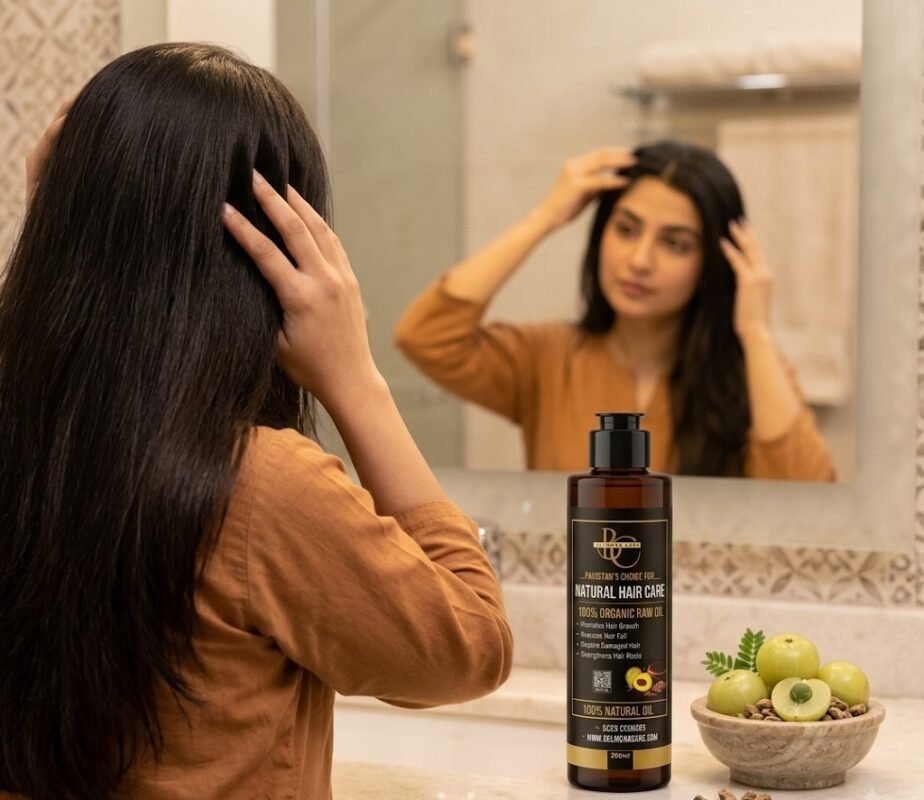
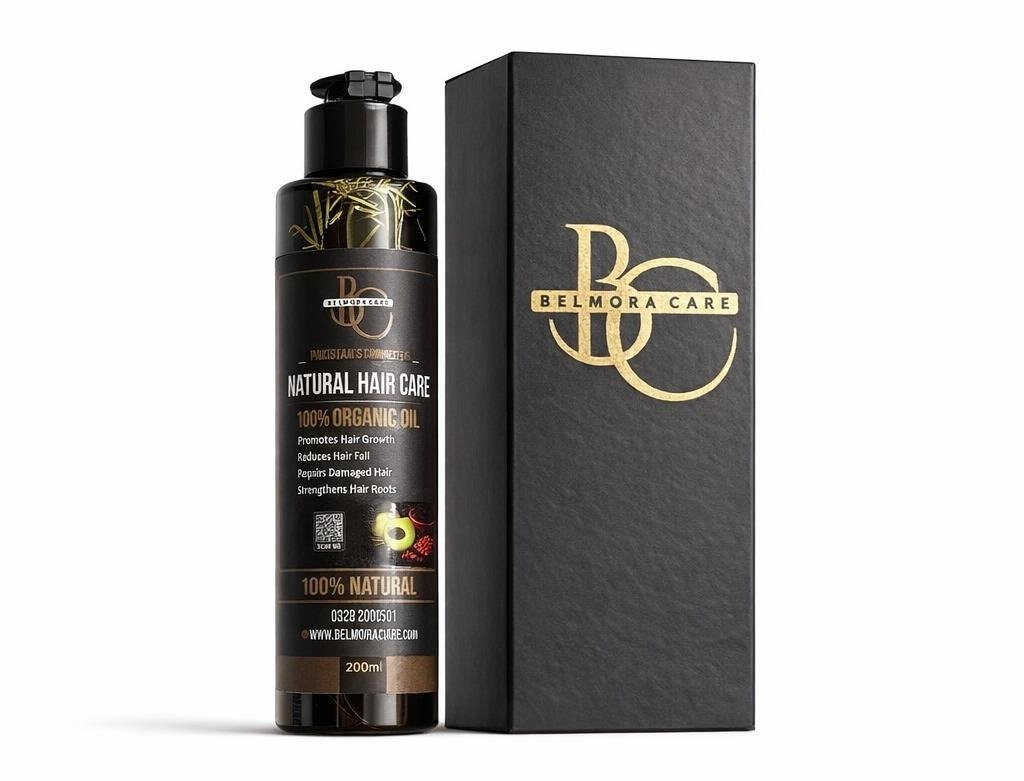
Belmora Care 100% Organic Hair Care Oil is designed around a traditional botanical approach to hair care. The product page describes it as a blend of herbal ingredients and botanical oils intended to nourish the scalp and support healthier-looking, stronger hair. It is marketed for both men and women.
Its role in a hard-water routine should be understood realistically.
It is not a water-softening treatment and should not be presented as a way to remove calcium or magnesium deposits.
Instead, it can be considered as the botanical oiling step within a broader routine.
The product includes ingredients such as Amla, Bhringraj, Aloe Vera, Balchar, Shikakai, Mustard Seed and Nagarmotha as part of its botanical formulation.
If your main concern is hair that feels dry or difficult to manage, the more useful approach is to combine appropriate cleansing, conditioning, gentle handling and a consistent routine rather than expecting one product to solve everything.
Explore Belmora Care 100% Organic Hair Care Oil
A Simple Routine You Can Follow
Here is a practical starting point:
1. Check your water
Look for signs of mineral-rich water or consider water testing if the issue is persistent.
2. Keep cleansing gentle
Use an appropriate shampoo and avoid over-washing simply because your hair feels coated.
3. Address buildup when necessary
A suitable clarifying or chelating product may help when mineral buildup is the concern.
4. Restore manageability
Use conditioner and minimize unnecessary friction.
5. Add botanical oiling if it suits you
A consistent oiling routine can be part of your overall hair-care approach.
6. Watch the pattern
If your hair remains unusually dry, brittle or is experiencing significant shedding despite routine changes, consider speaking with a dermatologist or qualified healthcare professional rather than assuming water is the only cause.





 Free shipping to all over Pakistan
 100% Organic Herbs – No Chemicals