
Hair Fall After Every Wash: Normal Shedding or a Warning Sign?
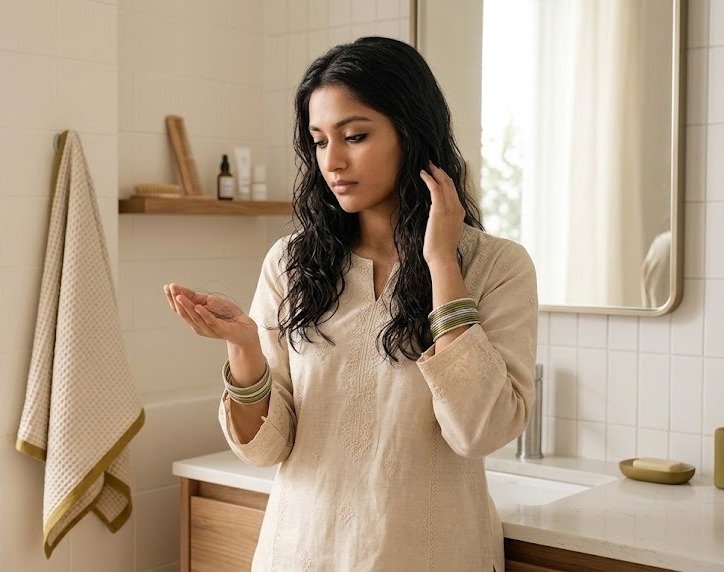
You finish washing your hair in Lahore, Multan, Faisalabad or Islamabad, look at the drain, and see what feels like a handful of hair. Then you notice strands on your towel and comb and immediately wonder: “Am I losing my hair?”
Before assuming the worst, separate normal shedding, excessive shedding and hair breakage. These are not the same biological process.
The American Academy of Dermatology notes that shedding around 50–100 hairs per day can be normal. The important question is whether your overall shedding pattern has changed and whether you are developing visible thinning.
Why Does Hair Fall Look Worse on Wash Day?
One reason wash-day shedding can look dramatic is accumulation.
If you wash every three or four days, hairs that naturally completed their growth cycle may remain trapped among longer strands until shampooing, rinsing and finger-combing release them. That can make one shower appear much worse than ordinary daily shedding.
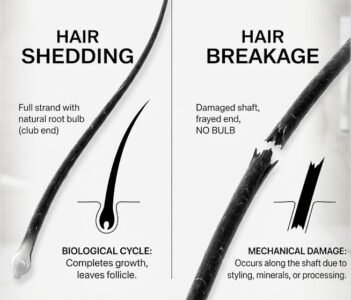
There is another important distinction: A shed hair usually comes from the follicle after completing its growth cycle. A broken hair is a damaged piece of the shaft.
These require different responses. If you see many complete strands with a small club-shaped end, shedding may be involved. If you see shorter pieces, split ends and uneven lengths, mechanical breakage may be contributing.
Normal Shedding vs Excessive Hair Fall
Normal shedding generally does not produce progressive loss of density.
A warning pattern can include:
- Noticeably increasing hair in the shower over several weeks
- A widening part
- Thinning around the temples or crown
- A smaller ponytail
- Visible scalp that was previously covered
- Repeated clumps of hair
- Bald or sharply defined patches
- Persistent scalp itching, redness, scaling or pain
Excessive shedding can occur after significant stress, illness, fever, surgery, major weight loss and other physiological changes. Telogen effluvium is one example where increased shedding may become noticeable months after a trigger. If the pattern continues or your density is visibly decreasing, treating the problem as “just dry hair” can delay finding the real cause.
Hair Shedding or Hair Breakage? The Difference Matters
Many people describe every strand found after shampooing as “hair fall,” but the biology is different.
Hair Shedding
Shedding occurs when a hair completes its growth cycle and leaves the follicle. This is a normal part of the hair cycle.
Hair Breakage
Breakage occurs along the hair shaft. Hard water, excessive heat, chemical processing, aggressive brushing, tight hairstyles and rough towel drying can increase mechanical stress on vulnerable hair. This distinction is particularly important in Pakistan because water quality can vary substantially between neighborhoods and water sources.
Can Hard Water Make Hair Fall After Washing?
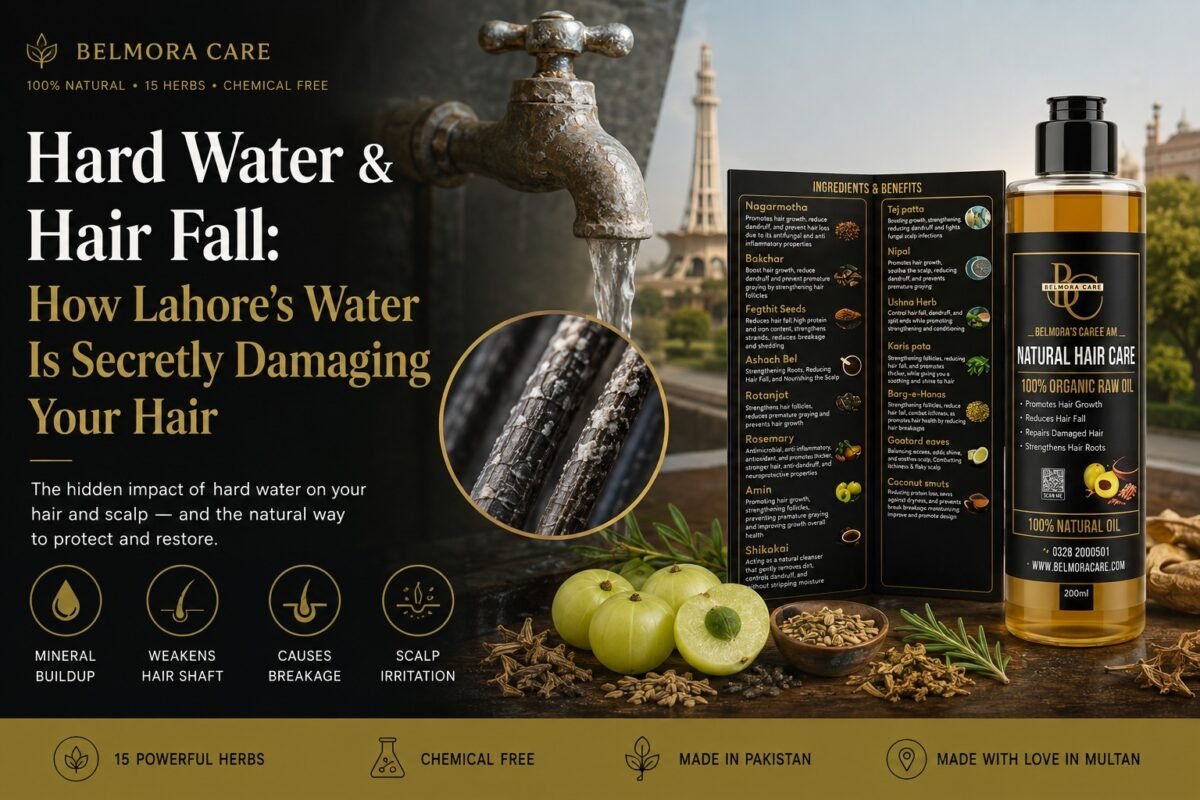
Hard water should not automatically be blamed for hair loss from the follicle. However, it can be relevant to hair texture, mineral deposition and breakage.
Hard water contains dissolved minerals, particularly calcium and magnesium. Research has demonstrated that these minerals can deposit on hair under some water conditions. One PubMed-indexed study found increased magnesium deposition on hair treated with hard water, although the researchers did not find statistically significant calcium deposition or obvious structural surface differences under their particular testing conditions.
Another study found higher calcium and magnesium deposition and reduced hair thickness in hard-water-treated samples compared with distilled-water-treated samples. Research conducted using hard water from Pakistan’s Khyber Pakhtunkhwa also found reduced tensile strength after repeated hard-water exposure, suggesting a possible connection with increased breakage.
This is why “hair falling out after washing” can sometimes actually mean hair breaking during or after washing.
What Is Happening to the Hair Cuticle?
Think of the cuticle as the outer protective structure of the hair shaft. Repeated exposure to water, friction, heat and mineral-rich water can affect how the hair behaves. Calcium and magnesium do not simply create a literal “plug” inside every follicle. That popular explanation is too simplistic.
A more scientifically defensible model is: Mineral-rich water → mineral interaction/deposition → altered hair-surface properties → increased roughness or mechanical stress → greater susceptibility to breakage in vulnerable hair.
Studies have shown that hair can interact with water hardness metals, with uptake influenced by factors including hair condition and pH.
The World Health Organization also explains that calcium and magnesium hardness can contribute to scale and deposits in water systems, particularly under suitable pH and alkalinity conditions.
Important: this does not mean hard water is proven to cause follicular hair loss.
Why Pakistani Climate Can Make Wash-Day Hair Fall Feel Worse
For someone living in Punjab, the environment can add several simultaneous stressors.
Hot, Dry Summers
High temperatures can increase sweating and encourage more frequent washing.
Frequent washing is not inherently bad, but aggressive cleansing combined with already dry lengths can increase the feeling of roughness.
Monsoon Humidity
During humid periods, hair can swell, become frizzy and feel harder to manage. A scalp that becomes sweaty may also encourage more frequent washing or scratching.
Dry Winters
Low humidity can make already fragile hair feel drier and more difficult to detangle.
Dust and Urban Pollution
Particles accumulating on the scalp can make people feel that their hair needs more aggressive cleansing. The answer is not necessarily more shampoo.
It is a balanced scalp-and-hair routine.
What About Amla, Rosemary and Other Botanical Ingredients?
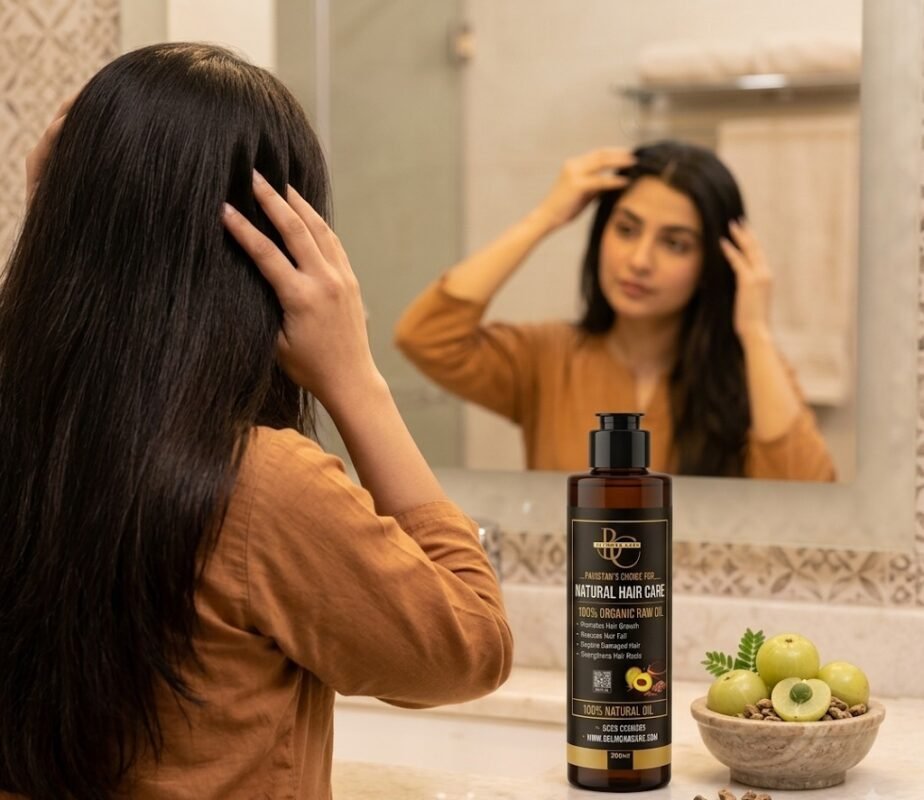
Traditional botanical hair care can be useful as a supportive routine, but it should not be presented as a substitute for diagnosing medical hair loss. Belmora Care’s formulation combines 15 traditional botanicals, including Amla, Bhringraj, Aloe Vera, Rosemary, Fenugreek, Curry Leaves and other plant ingredients.
Amla, scientifically known as Emblica officinalis, contains several phenolic and flavonoid compounds. Research has identified compounds including gallic acid, ellagic acid, quercetin and rutin in Amla extracts and demonstrated antioxidant activity in experimental models. That provides biochemical context for why Amla is interesting in botanical formulations, but it does not prove that topical Amla oil regrows hair in humans or reverses every cause of hair loss.
How Does a Cold-Pressed Herbal Oil Fit Into the Routine?
A botanical oil works differently from a shampoo or mineral-removal treatment. Its practical role is to provide an oil-based conditioning step and support a consistent scalp and hair-care routine. Lipids can improve the feel and manageability of hair by reducing friction and helping the hair surface feel smoother.
But an oil should not be described as dissolving calcium carbonate deposits inside follicles. That claim goes beyond the available evidence.
Similarly, silicone-containing products are not inherently harmful. Silicones can provide excellent slip and reduce friction. The difference is that they are primarily cosmetic conditioning agents, whereas a botanical oil offers a lipid-rich, plant-derived approach.
The better question is not:
“Are silicones bad?”
It is:
“Which formulation fits my scalp, hair condition, routine and personal preferences?”
A Practical Wash-Day Routine for Reducing Breakage
1. Do Not Judge Your Hair by One Shower
Track the pattern over several weeks rather than counting every strand.
Look for density, part width, hairline changes and scalp condition.
2. Detangle Before Aggressive Washing
If your hair tangles easily, gently loosen knots before shampooing.
Avoid pulling through large knots after the hair becomes saturated.
3. Clean the Scalp, Not the Lengths Aggressively
Use your fingertips rather than scratching with your nails.
The scalp needs cleansing; the lengths usually need gentler handling.
4. Condition the Hair Lengths
Conditioning can improve slip and reduce friction during detangling.
5. Reduce Mechanical Stress
Avoid vigorous towel rubbing.
Instead, gently squeeze excess water from the hair and handle wet strands carefully.
6. Consider Your Water
If you notice persistent roughness, mineral residue around fixtures or a major texture change after moving to a different water source, water hardness may be worth investigating.
7. Keep Botanical Oiling Consistent
If your scalp tolerates oil well, incorporate a moderate amount into your weekly routine rather than applying excessive quantities.
When Is Hair Fall After Washing a Warning Sign?
The strongest warning is not simply seeing hair in the drain.
It is progressive change.
Consider professional evaluation if you notice:
- Persistent excessive shedding
- Visible thinning
- Receding hairline
- Bald patches
- Scalp pain or inflammation
- Severe scaling
- Sudden dramatic shedding
- Hair loss after a significant illness or physiological event
- No improvement despite sensible routine changes
Hair loss has many possible causes, including genetic factors, hormonal influences, autoimmune conditions, nutritional issues, illness and stress. An oil cannot diagnose which one applies to you. The American Academy of Dermatology specifically recommends professional assessment when people notice significant thinning or large amounts of hair loss.
How Long Should You Give a Natural Hair-Care Routine?
Hair biology moves slowly. Do not expect a botanical oil to transform follicular activity overnight.
Belmora Care’s stated product positioning uses a 60-day timeframe for visible improvement in hair fall and new growth, but this should be understood as a brand claim rather than a guaranteed biological outcome for every individual.
A sensible approach is to evaluate:
- Amount of visible shedding
- Hair breakage
- Scalp comfort
- Hair manageability
- Appearance of density
- Consistency of your routine
If there is persistent or progressive hair loss, professional diagnosis remains more important than extending an oil experiment indefinitely.
Final Takeaway: Do Not Panic at the Shower Drain
Seeing hair after every wash does not automatically mean you are going bald.
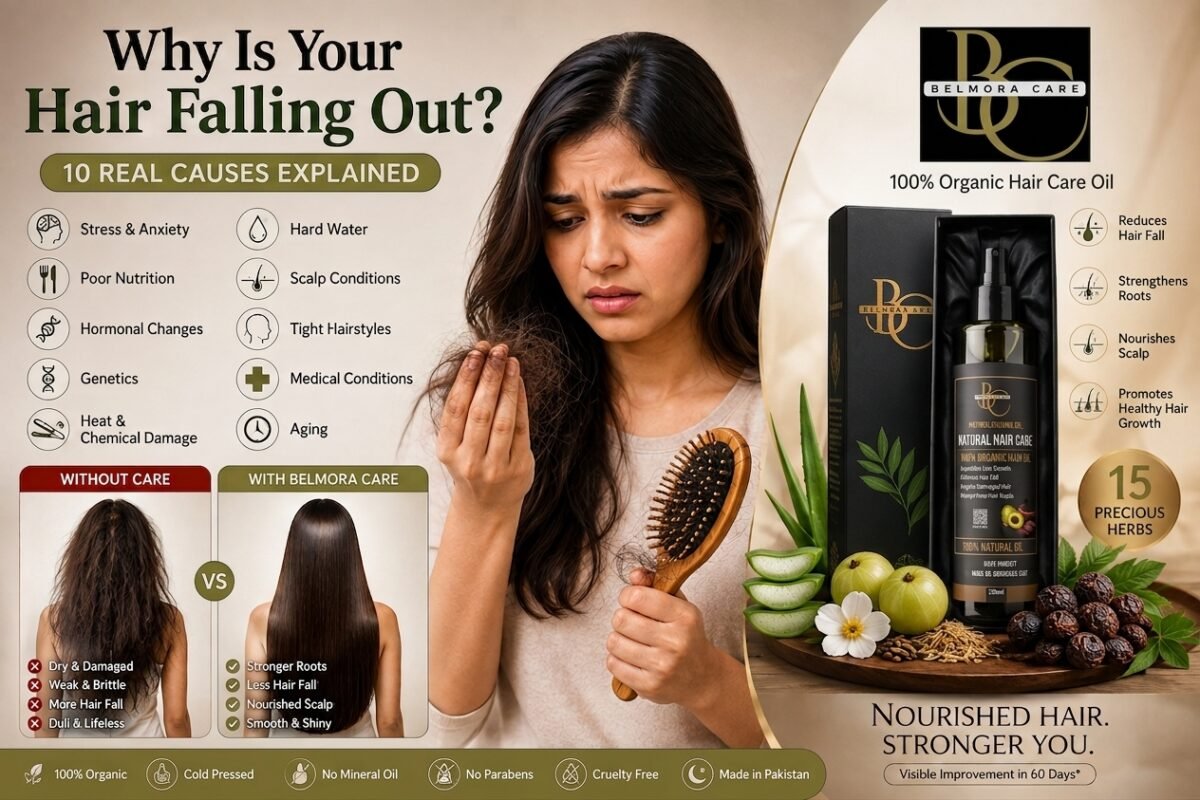
The more useful question is: “Am I seeing normal shedding, excessive shedding, or breakage?” For many people, the answer involves several factors at once: washing technique, hard water, weather, scalp condition, heat styling, stress and the natural hair-growth cycle.
For Pakistani hair-care routines, water quality deserves particular attention. Research has demonstrated that hard-water exposure can increase mineral deposition and, under some conditions, reduce hair strength. At the same time, avoid turning hard water into the explanation for every case of hair loss. A practical routine combines gentle washing, conditioning, careful wet-hair handling, appropriate mineral management and consistent botanical oiling.
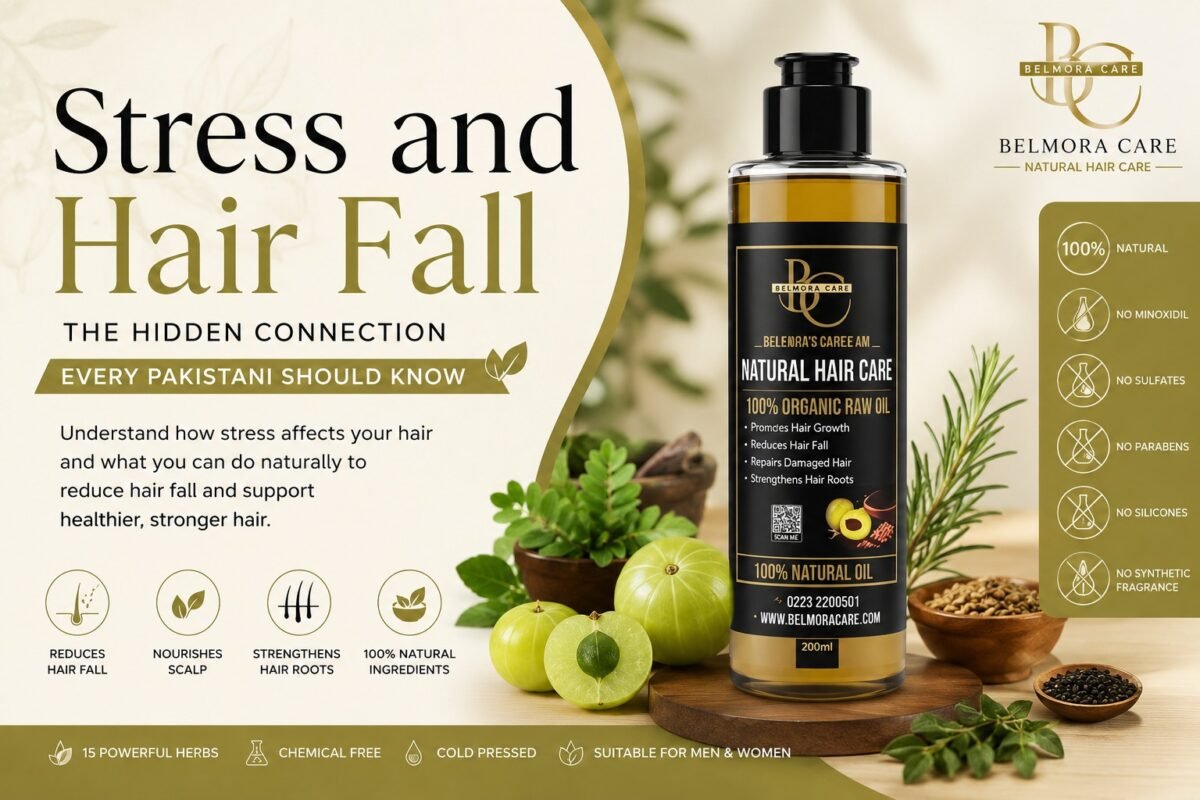
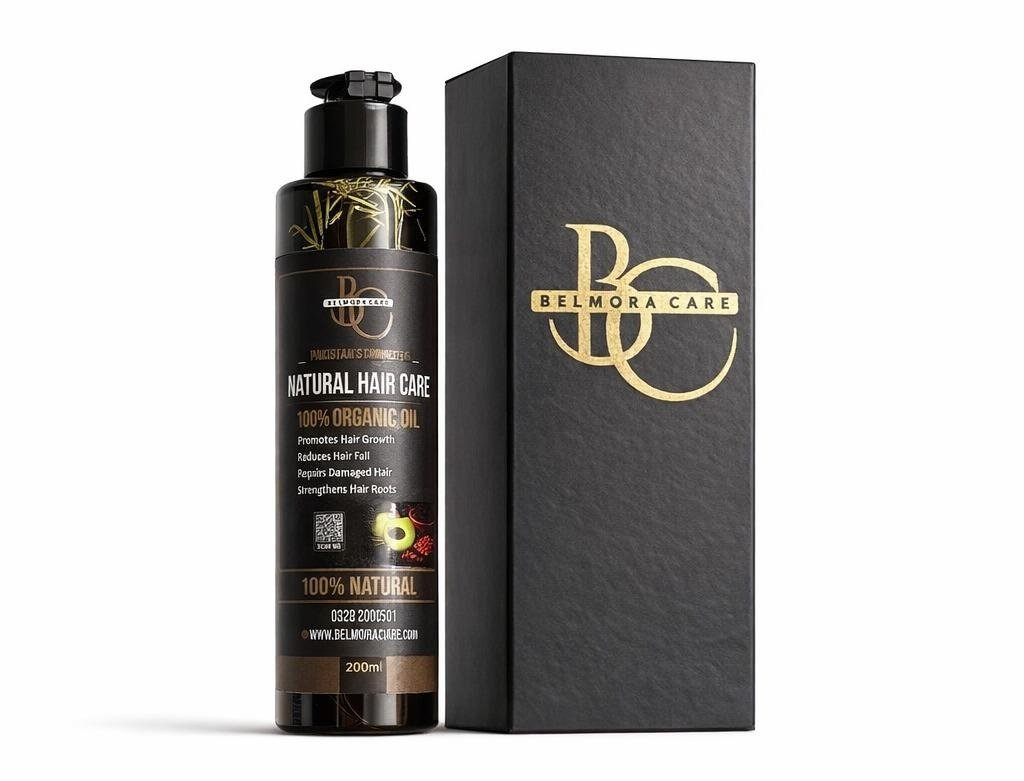
Belmora Care’s 15-botanical, 100% organic hair oil is designed as a traditional botanical addition to that routine, without minoxidil, silicones, sulfates, parabens or synthetic fragrance. The brand promotes a 60-day results timeframe, but individual outcomes vary and persistent hair loss should be professionally assessed.
Frequently Asked Questions
1. Is hair fall after every wash normal?
Some hair shedding after washing is normal because hairs naturally complete their growth cycle. Around 50–100 hairs per day can fall without indicating disease. What matters is a persistent increase, visible thinning, bald patches or other scalp symptoms rather than the number seen during one shower.
2. Why do I lose more hair after shampooing?
Washing can release hairs that were already ready to shed, especially if you wash only every few days. However, rough shampooing, aggressive detangling and hard-water-related hair weakness can also contribute to breakage. Look at whether the strands are intact or snapping into shorter pieces.
3. Does hard water cause hair fall?
Hard water is better established as a potential contributor to mineral deposition, roughness and hair breakage than as a direct cause of follicular hair loss. Studies have found changes in mineral deposition and hair strength under experimental hard-water exposure, including research using Pakistani water samples.
4. How can I reduce hair fall after washing?
Use gentle shampooing, avoid scratching, condition the lengths, reduce vigorous towel drying, detangle carefully and investigate hard water if your hair feels persistently rough. If shedding continues with visible thinning, consult a dermatologist rather than relying exclusively on cosmetic or botanical products.
5. Can hair oil reduce hair fall after washing?
A hair oil can support conditioning, manageability and a consistent scalp-care routine, particularly when dryness and breakage are involved. It cannot treat every medical cause of shedding. Belmora Care’s 15-botanical formulation can be incorporated as the oiling step while other causes are addressed separately.
6. Is Amla scientifically useful for hair care?
Amla contains antioxidant-related compounds including gallic acid, ellagic acid, quercetin and rutin, and experimental research demonstrates antioxidant activity. However, antioxidant findings do not automatically prove clinical hair regrowth. Amla is best described as a botanically interesting supportive ingredient rather than a guaranteed hair-loss treatment.
7. How do I know whether my hair is shedding or breaking?
Full-length hairs are more consistent with shedding, while numerous short fragments, split ends and uneven lengths suggest breakage. Both can occur together. If your hair becomes increasingly fragile after washing, investigate water quality, heat, chemical processing, detangling technique and conditioning.
8. Can seasonal changes increase hair shedding in Pakistan?
Seasonal changes can coincide with noticeable changes in shedding, although not every increase should automatically be attributed to weather. Heat, humidity, stress, illness, diet, washing frequency and scalp conditions can overlap. Persistent or progressive thinning deserves assessment instead of being dismissed as seasonal hair fall.
9. How long should I use Belmora Care before evaluating results?
Belmora Care promotes a 60-day timeframe for visible hair-fall reduction and new growth. Individual results can differ, and there is no guarantee that every cause of hair loss will respond to an oil. Evaluate consistency, shedding, breakage and hair condition rather than expecting overnight changes.
10. When should I see a dermatologist for hair fall?
Seek professional assessment when shedding is persistent or rapidly increasing, when you develop visible thinning or bald patches, or when your scalp becomes painful, inflamed or severely scaly. Hair loss can have medical causes that require diagnosis, so an oil should not replace appropriate clinical evaluation.







 Free shipping to all over Pakistan
 100% Organic Herbs – No Chemicals