
Postpartum Hair Fall: How Long It Lasts and How to Fix It Naturally
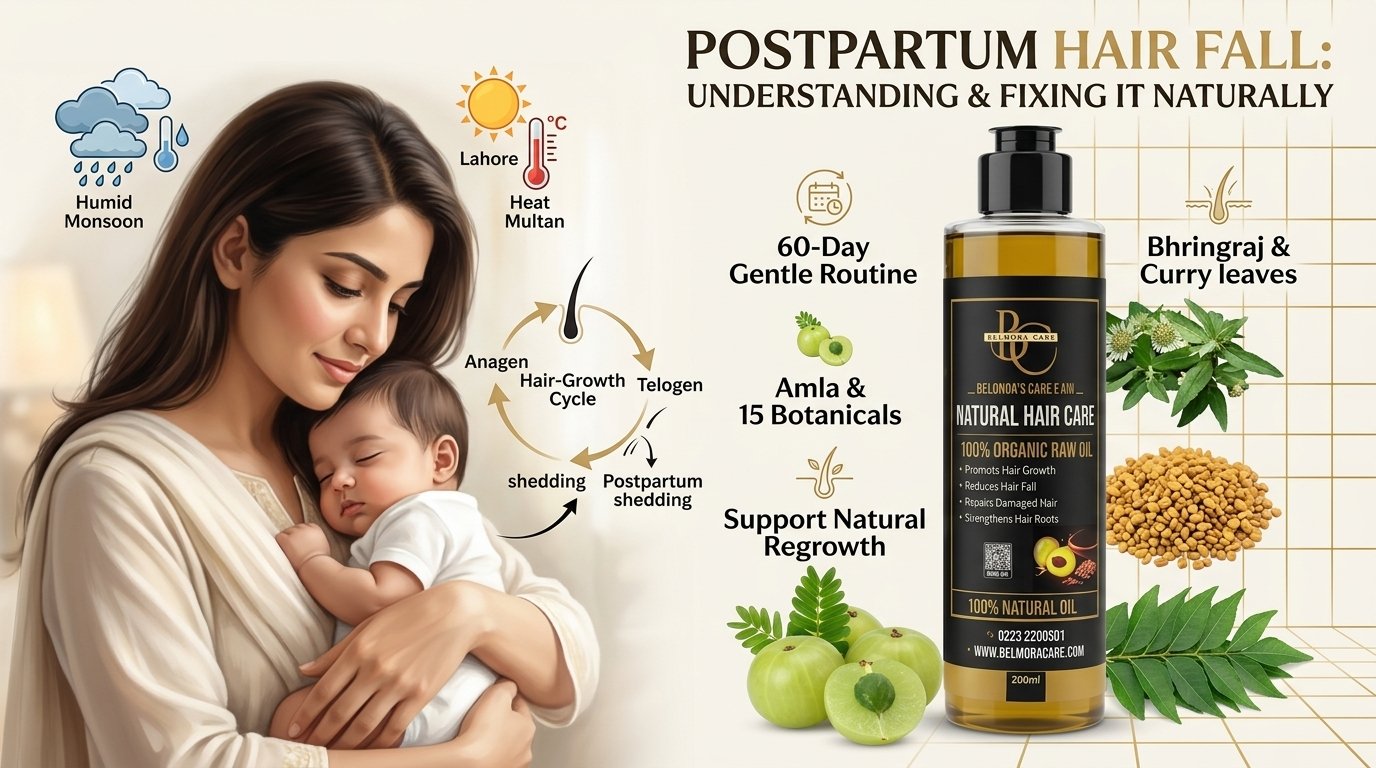
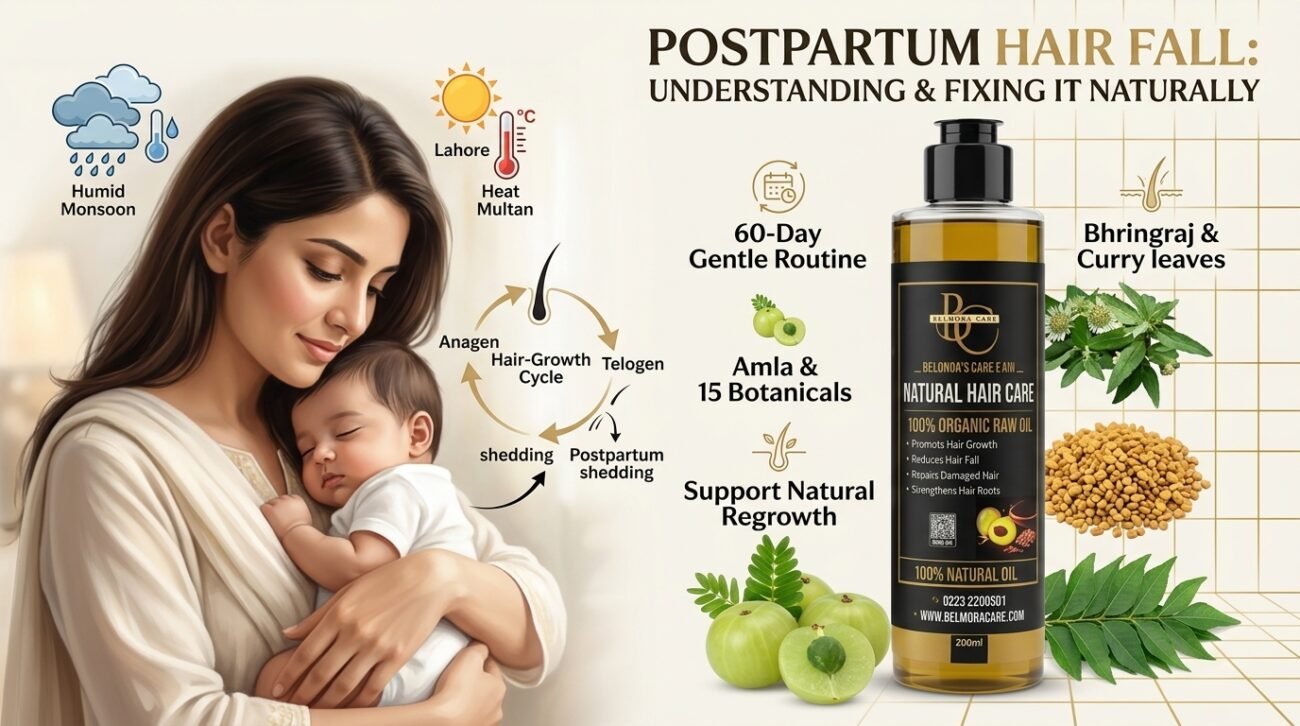
If you have recently given birth and suddenly notice hair collecting on your pillow, comb, bathroom floor, or shower drain, you are not alone. Many new mothers in Pakistan notice significant shedding during the months after delivery. The concern can become even greater when Lahore’s humid monsoon weather, Multan’s intense heat, hard water, frequent washing, and daily household demands add scalp and hair stress.
The good news is that postpartum hair fall is usually temporary. It is commonly a form of telogen effluvium associated with the hormonal changes that occur after childbirth.
What Is Postpartum Hair Fall?
Postpartum hair fall is excessive hair shedding that commonly develops a few months after childbirth when hormonal changes cause more follicles to enter the resting telogen phase. It usually improves naturally as the hair-growth cycle normalizes. Gentle scalp care, adequate nutrition, and minimizing hair damage can support recovery.
During pregnancy, increased estrogen levels help keep a greater proportion of scalp hairs in the active anagen growth phase. After delivery, estrogen levels fall, and many of these follicles transition toward telogen. Several months later, the affected hairs shed together, making normal daily shedding suddenly appear dramatic. This is why postpartum hair fall can feel as though it appeared “overnight” even though the biological change began earlier.
When Does Postpartum Hair Fall Start?
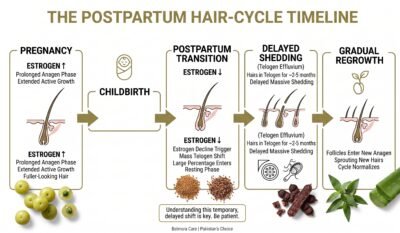
Postpartum shedding does not necessarily begin immediately after childbirth. Many women begin noticing increased shedding around two to five months after delivery, although timing can vary. Research on the postpartum hair cycle shows that pregnancy-related changes can keep follicles in anagen longer before they return toward the telogen phase after delivery.
The pattern can therefore look like this: Pregnancy → increased anagen retention → delivery → hormonal shift → telogen transition → delayed shedding → gradual regrowth. This delayed pattern is one reason postpartum hair fall can be confusing.
How Long Does Postpartum Hair Fall Last?
For many women, the most noticeable shedding lasts for several months and gradually settles. Cleveland Clinic notes that postpartum hair loss commonly occurs around three months after childbirth and generally lasts less than six months, with fullness often returning by the baby’s first birthday. However, individual recovery varies. Some women may notice continued changes for longer, particularly when postpartum shedding overlaps with another hair-loss condition, nutritional deficiency, thyroid dysfunction, stress, or ongoing scalp and hair damage.
A 2024 study of women with postpartum hair loss found that postpartum telogen effluvium can coexist with other conditions such as androgenetic alopecia and traction alopecia. This is important because not every case of persistent postpartum thinning should automatically be attributed to normal postpartum shedding.
Why Does Hair Fall After Pregnancy?
The central mechanism is the hair-growth cycle. Your follicles continuously move through three major phases:
1. Anagen — Active Growth
This is the growth phase. During pregnancy, hormonal changes can keep more hairs in anagen for longer.
2. Catagen — Transition
The follicle temporarily changes activity as the growing phase ends.
3. Telogen — Resting and Shedding
The follicle enters a resting phase before the old hair is released.
After childbirth, the hormonal environment changes. A larger number of follicles can move into telogen, creating synchronized shedding several weeks or months later. Telogen effluvium is therefore better understood as a hair-cycle response, not simply “weak roots.”
Postpartum Hair Fall vs Hair Breakage: They Are Not the Same
One of the most important distinctions is whether you are losing complete hairs from the follicle or experiencing breakage along the shaft. With postpartum telogen effluvium, you may notice:
- Increased hair on your pillow or clothing
- More hair coming out during washing
- Diffuse thinning across the scalp
- Full-length hairs with a club-shaped telogen root
- Relatively normal-looking scalp skin
Hair breakage is different. It commonly produces shorter pieces of hair and may be associated with excessive heat, chemical processing, friction, tight hairstyles, dryness, or mechanical damage. Understanding this distinction prevents you from treating every type of hair loss as the same problem.
Can You Fix Postpartum Hair Fall Naturally?
You cannot completely switch off hormonally triggered postpartum telogen effluvium with an oil, shampoo, or home remedy. However, you can create better conditions for the scalp and hair while the natural growth cycle recovers. A practical natural approach focuses on four areas:
- Nutrition
- Gentle scalp care
- Reducing mechanical damage
- Maintaining the scalp’s protective lipid environment
1. Prioritize Protein and Nutrient-Dense Foods
Hair production requires adequate nutritional support. Restrictive dieting after childbirth can make existing shedding more difficult to manage. A balanced diet should include appropriate sources of:
- Protein
- Iron
- Zinc
- Essential fatty acids
- B vitamins
- Vitamin D
If shedding is unusually severe, prolonged, or accompanied by fatigue or other symptoms, speak with a qualified healthcare professional rather than automatically taking supplements. Iron deficiency and thyroid dysfunction are among the conditions that can contribute to persistent hair loss.
2. Treat Your Scalp Gently
The postpartum period is not the ideal time for aggressive scalp treatments. Avoid:
- Excessive scratching
- Very hot water
- Tight hairstyles
- Frequent high-temperature styling
- Aggressive brushing
- Unnecessary chemical processing
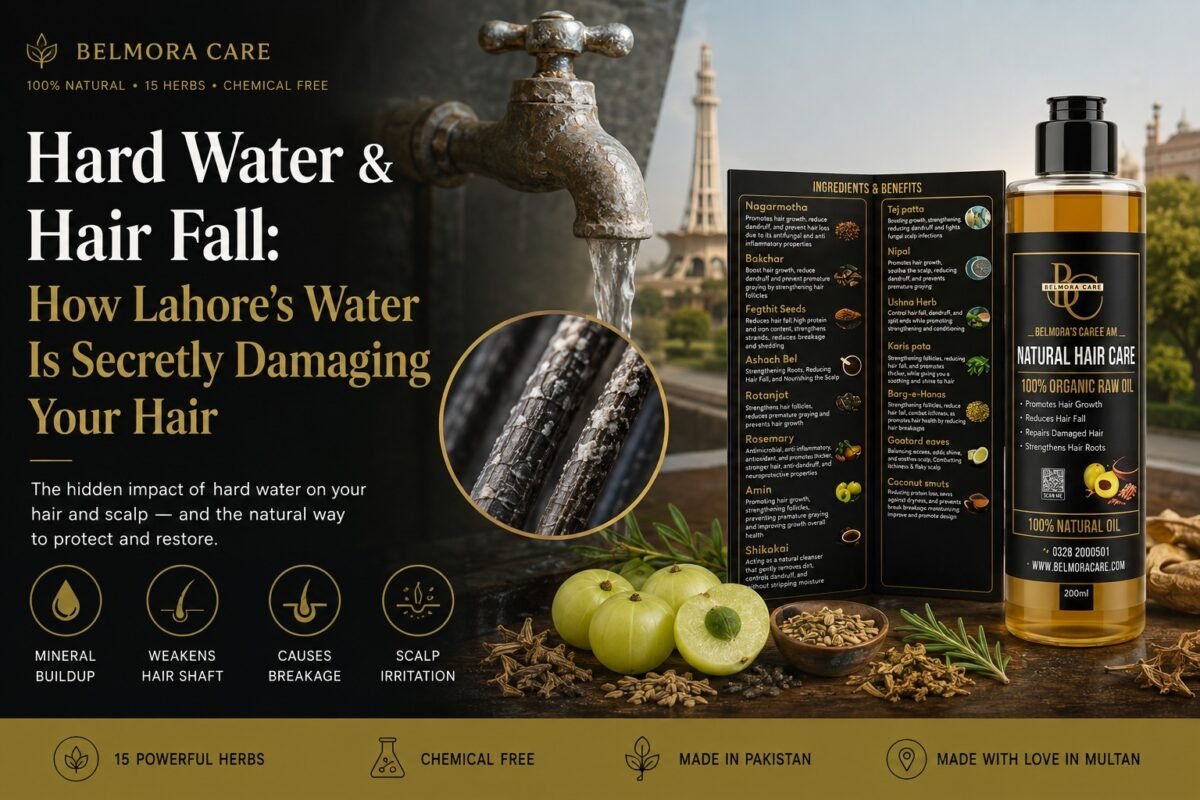
This matters particularly in Punjab, where hard underground water can leave mineral deposits on fixtures and may contribute to a rougher hair-washing experience. Hard water does not cause postpartum telogen effluvium, but environmental and mechanical stress can make already-shedding hair feel drier and more fragile.
3. Support the Scalp Lipid Environment
The scalp has its own protective surface environment consisting of sebum, lipids, water, and skin-barrier components. A gentle oiling routine can help reduce the feeling of dryness and improve manageability, although it should not be described as a treatment that directly reverses the hormonal trigger of postpartum telogen effluvium.
This distinction is important: Postpartum hormonal change → initiates shedding
Good scalp and hair care → supports comfort, manageability, and reduced secondary damage. That is a much more scientifically responsible way to approach natural postpartum hair care.
Why Choose Cold-Pressed Herbal Hair Oil?
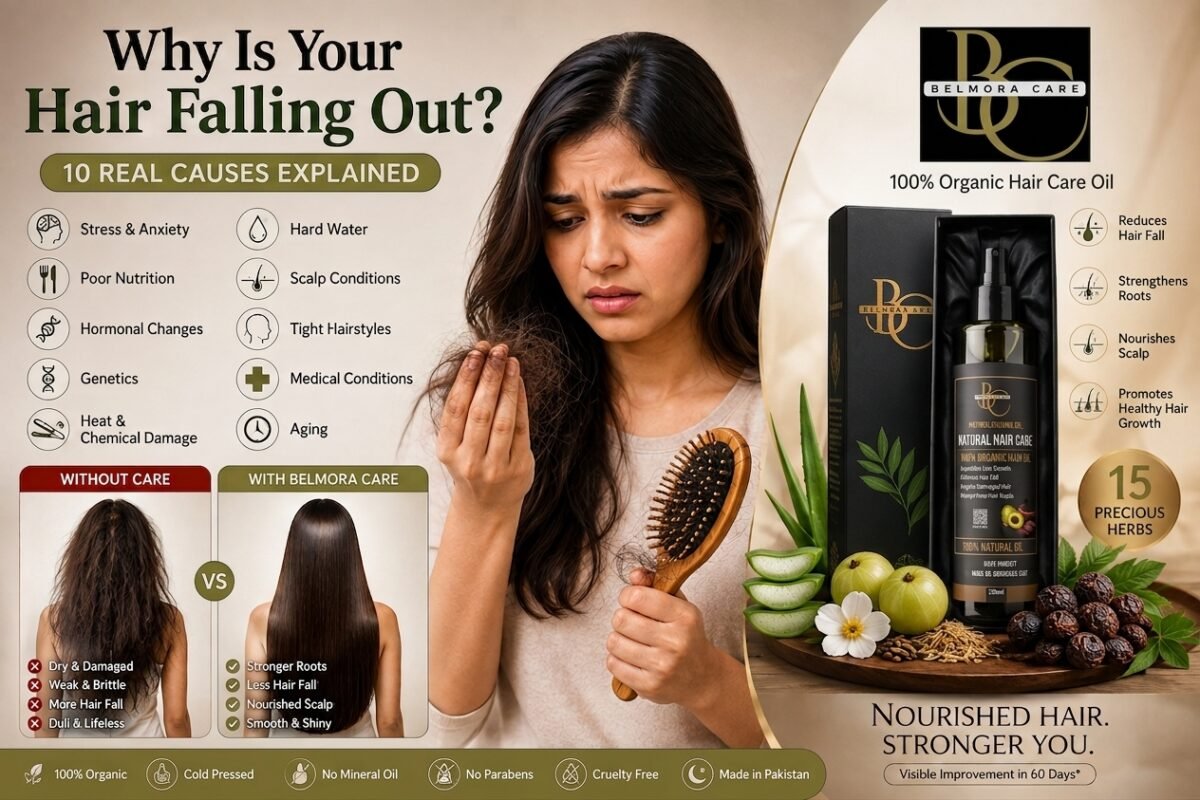
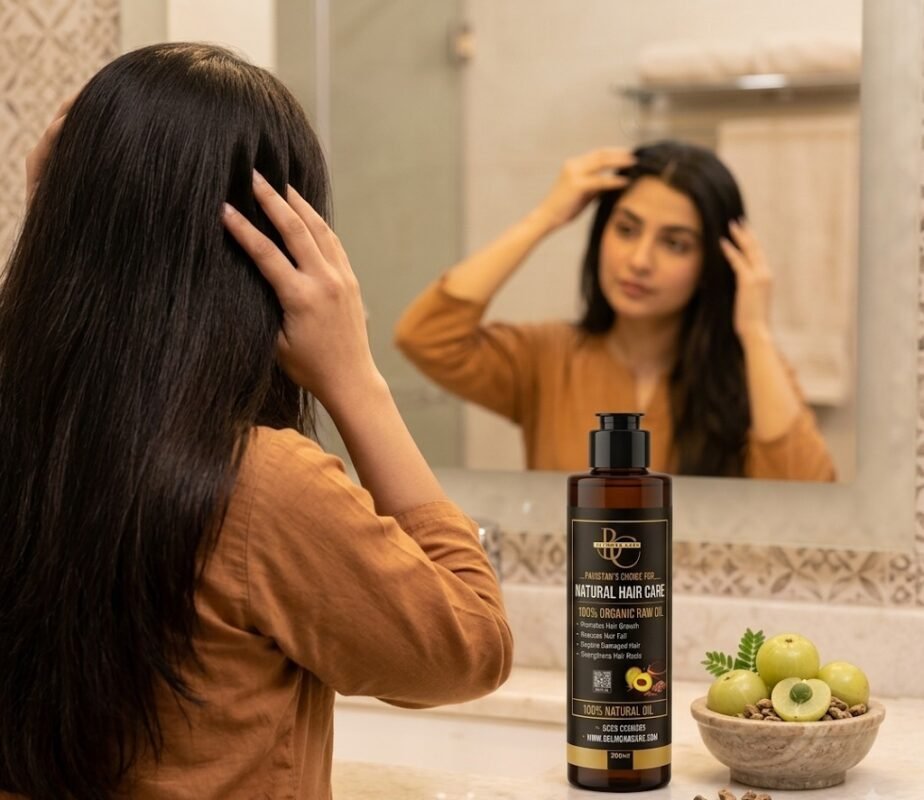
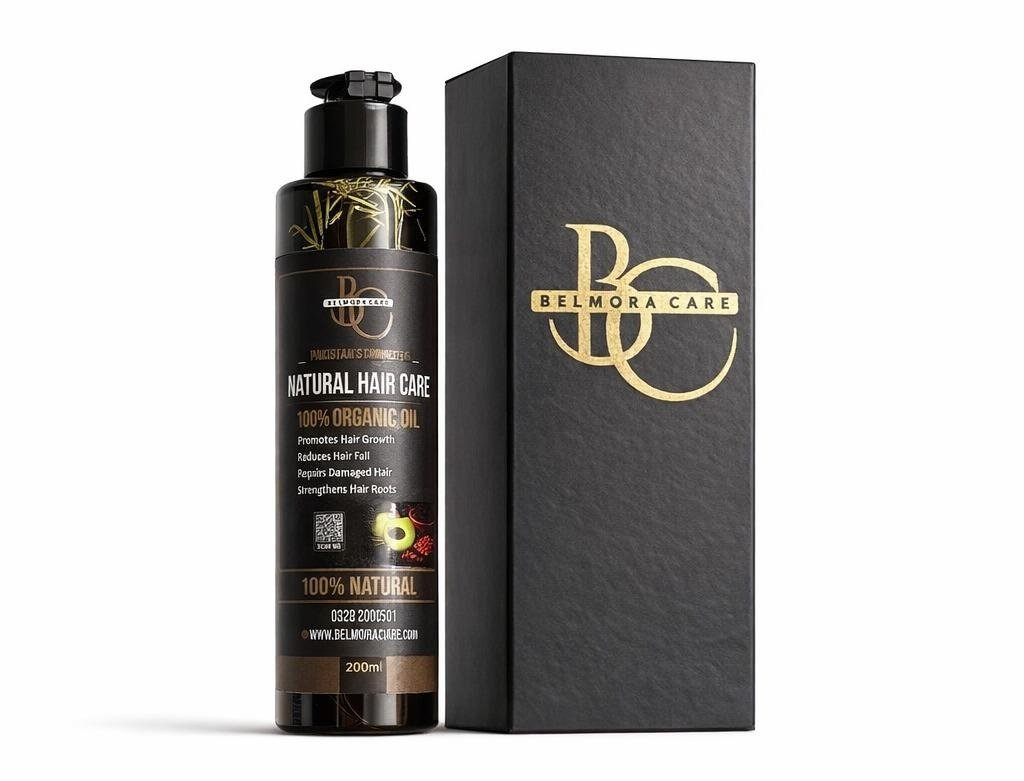
Traditional botanical oils can be useful as part of a gentle scalp-care routine because they combine plant-derived lipids and botanical compounds with a massage-based application method. Belmora Care’s formulation contains 15 traditional botanicals, including ingredients such as Amla, Bhringraj, Aloe Vera, Rosemary, Fenugreek, and Curry Leaves.
Amla, botanically known as Emblica officinalis, is particularly interesting because it contains polyphenolic compounds such as gallic- and ellagic-acid-related constituents. These compounds have antioxidant properties, although laboratory antioxidant activity should not automatically be translated into a clinical claim that Amla cures postpartum hair loss.
The advantage of a cold-pressed or carefully prepared botanical oil is therefore best framed around scalp conditioning and hair-fiber care, rather than promising to override the biological hair cycle.
What About Silicone-Based Hair Products?
Silicones are not inherently “bad” for hair. They can temporarily improve slip, smoothness and the appearance of damaged hair by coating the fiber. The limitation is that cosmetic smoothing is not the same thing as correcting a biological cause of shedding.
Likewise, drying alcohol-heavy scalp products can be uncomfortable for some people, particularly when the scalp is already irritated or dry. A lipid-compatible botanical oil can provide a different approach: rather than relying primarily on cosmetic surface masking, it can be used as a conditioning step within a broader scalp-care routine. The objective should be healthy-feeling hair and a comfortable scalp, not a promise of instant follicle activation.
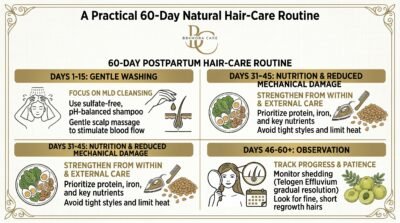
A Practical 60-Day Natural Hair-Care Routine
A realistic postpartum routine should be simple enough for a new mother to maintain.
Weeks 1–2: Stabilize the Routine
Keep washing gentle and avoid aggressive brushing. Reduce tight hairstyles and excessive heat.
If using a botanical hair oil, apply a moderate amount to the scalp and hair according to product directions rather than saturating the scalp.
Weeks 3–4: Focus on Consistency
Continue gentle scalp care and maintain adequate nutrition and hydration.
Do not judge success solely by the number of hairs seen in the shower. Postpartum shedding naturally fluctuates.
Weeks 5–8: Evaluate Hair Quality
Look for improvements in:
- Hair manageability
- Scalp comfort
- Reduced breakage
- Appearance of short regrowing hairs
- Overall hair feel
A 60-day routine can be a useful observation period, but it should not be presented as a guaranteed biological deadline for postpartum recovery. The underlying hair cycle may take considerably longer.
When Should You See a Doctor?
Postpartum shedding is common, but persistent or unusual hair loss deserves evaluation.
Consider speaking with a dermatologist or healthcare professional if:
- Heavy shedding continues beyond the expected recovery period
- You develop clearly defined bald patches
- Your scalp becomes painful, inflamed, or intensely itchy
- Hair loss is concentrated in a pattern rather than diffuse
- You experience significant fatigue or other symptoms
- You suspect iron deficiency or thyroid problems
- Hair density continues declining instead of gradually stabilizing
This is especially important because postpartum telogen effluvium can coexist with other hair-loss disorders.
Postpartum Hair Care in Pakistan: Consider Your Environment Too
A postpartum scalp does not exist in isolation. For women living in Multan, Lahore, Faisalabad, Rawalpindi, or Islamabad, seasonal and environmental conditions can influence how comfortable the scalp and hair feel.
Multan’s intense summer heat can increase sweating and scalp discomfort. Lahore’s humid monsoon conditions can make the scalp feel oilier or itchier. Dry winter air can increase the sensation of dryness, while hard water may contribute to mineral residue on the hair fiber. These factors should be considered secondary hair-care stressors, not the primary cause of postpartum telogen effluvium. This distinction helps build a better holistic routine: manage the hormonal hair-cycle change while minimizing avoidable environmental and mechanical damage.
A More Realistic Way to Think About “Natural” Hair Recovery
Natural postpartum hair care should not mean replacing evidence with exaggerated botanical claims. A better framework is: Hormonal recovery + adequate nutrition + gentle scalp care + reduced breakage + consistent conditioning + time
Botanical oils can fit into this framework as a supportive cosmetic and scalp-conditioning step. The goal is not to promise that an oil will stop postpartum shedding overnight. The goal is to protect the hair you have, maintain scalp comfort, and create a consistent routine while your follicles progress through their natural recovery cycle.
Conclusion: Give Your Hair Time and Consistent Care
Postpartum hair fall can be emotionally difficult, especially when you are already adjusting to life with a newborn. But increased shedding after pregnancy is commonly temporary and is strongly linked to the normal shift in the hair-growth cycle after childbirth. A thoughtful natural routine can focus on gentle washing, adequate nutrition, reduced mechanical damage, and scalp conditioning.
For mothers who want to incorporate botanical scalp care, Belmora Care’s 100% chemical-free herbal hair oil contains 15 traditional botanicals and can be incorporated into a consistent hair-care routine. Rather than expecting an overnight transformation, use consistency as the benchmark. A 60-day routine can help you assess changes in scalp comfort, hair manageability, and visible shedding, while remembering that biological regrowth can take longer.
FAQ
1. Can stress cause hair fall?
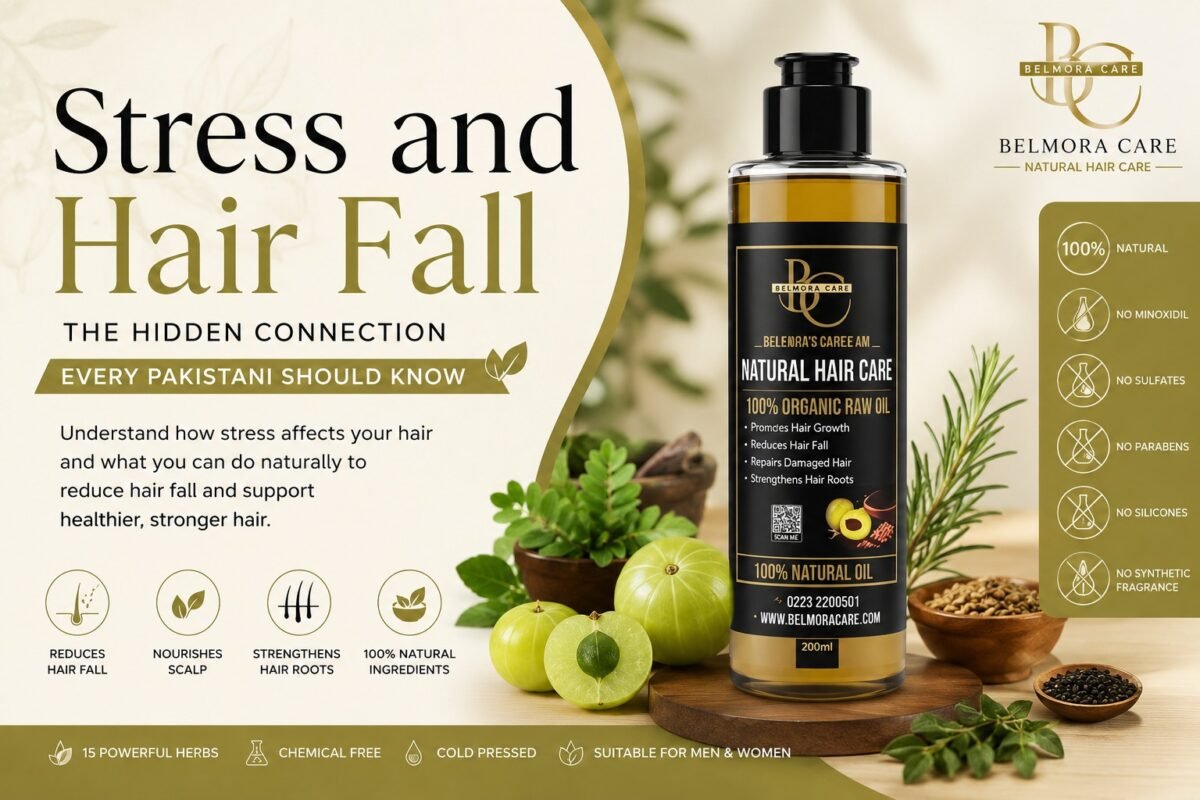
Yes. Significant psychological or physical stress can trigger telogen effluvium, a temporary form of diffuse hair shedding. The shedding may appear weeks or months after the stressful event. However, stress is only one possible cause, so persistent or severe hair loss should be professionally assessed.
2. How does stress cause hair shedding?
Significant stress can disrupt the normal hair-growth cycle and cause more follicles to enter the resting telogen phase. When those hairs later shed, a person may notice substantially more hair during washing, brushing, or daily activities.
3. What is telogen effluvium?
Telogen effluvium is a form of diffuse, non-scarring hair shedding that can occur after physiological or psychological stress. It is often temporary, but the underlying trigger should be identified when possible. Other causes of hair loss should also be ruled out when shedding persists.
4. Does stress-related hair loss grow back?
Stress-related shedding can improve when the triggering factor resolves, but regrowth takes time because hair follicles operate on a biological growth cycle. If shedding continues for months, becomes severe or produces patchy loss, consult a dermatologist rather than assuming stress is the only cause.
5. How long does stress-related hair fall last?
There is no identical timeline for everyone. Stress-related shedding can gradually settle after the trigger is addressed, while visible regrowth takes longer. A 60-day period can be useful for monitoring consistency and hair condition, but it should not be treated as a guaranteed medical recovery period.
6. Can poor sleep contribute to hair problems?
Poor sleep commonly accompanies stress, and emerging research is investigating connections between sleep disruption, stress pathways, and different hair-loss conditions. Improving sleep consistency is a sensible part of overall wellness, but persistent hair loss should not automatically be attributed to sleep alone.
7. Can hard water and stress cause hair fall together?
They can contribute to different aspects of the problem. Stress can be associated with increased shedding, while mineral-rich hard water may contribute to roughness, dryness, and breakage. When both occur together, distinguishing true shedding from hair-shaft breakage becomes particularly important.
8. Can Belmora Care help with stress-related hair fall?
Belmora Care can be used as a supportive botanical oiling step within a broader hair-care routine. Its formulation contains 15 traditional botanicals, including Amla, Bhringraj, Aloe Vera, and Rosemary. It should not be presented as a guaranteed treatment for telogen effluvium or other medical hair-loss conditions.
9. How often should I oil my hair when experiencing stress-related shedding?
There is no universal oiling frequency. A moderate routine, such as one or two sessions weekly, may be appropriate for many people if the scalp tolerates it. Avoid aggressive massage or excessive product buildup, particularly when the scalp is irritated or sensitive.
10. When should I see a dermatologist for hair fall?
Seek professional evaluation if hair loss is sudden, severe, patchy, progressively worsening, associated with scalp inflammation or continues for several months. A dermatologist can distinguish stress-related shedding from conditions such as pattern hair loss, alopecia areata, nutritional problems or scalp disorders.






 Free shipping to all over Pakistan
 100% Organic Herbs – No Chemicals